Adobo in Abu Dhabi
The Filipino community in the Gulf is one of the largest expatriate populations in the region. Their food traditions — from adobo to sinigang — have quietly become part of the Gulf's culinary landscape, carried by millions of workers and families who refuse to let distance dilute the flavors of home.

Home Cooking Abroad
There are an estimated 2.5 million Filipinos living and working in the Gulf states. They work in healthcare, construction, hospitality, retail, education, and domestic service. They are nurses in Abu Dhabi, engineers in Doha, teachers in Riyadh, and hotel staff in Dubai. And no matter what they do for a living, they cook.
For Filipino workers and families in the Gulf, cooking from home is an act of cultural preservation performed daily. In shared apartments where four or five workers share a small kitchen, in family homes where both parents work long shifts, in staff accommodations behind hotels and hospitals — the flavors of the Philippines are kept alive through persistent, everyday cooking.
This is not a food culture that adapts easily to eating out. While Gulf cities have Filipino restaurants and carinderias (small eateries), the core of Filipino food culture is home cooking. The recipes are personal, regional, and tied to specific family memories. A mother's sinigang is not the same as a restaurant's sinigang, and for most Filipinos in the Gulf, the home-cooked version is the only one that counts.
The kitchen is also a social space. In shared accommodations, cooking together is one of the primary ways Filipino workers build community. A pot of adobo simmering on a Friday evening is rarely made for one person. It is made for the roommates, the colleagues who are coming over, the neighbor from Cebu who mentioned she was homesick. The portions are always generous because the food is never really just about the food.
Adobo: More Than a Recipe
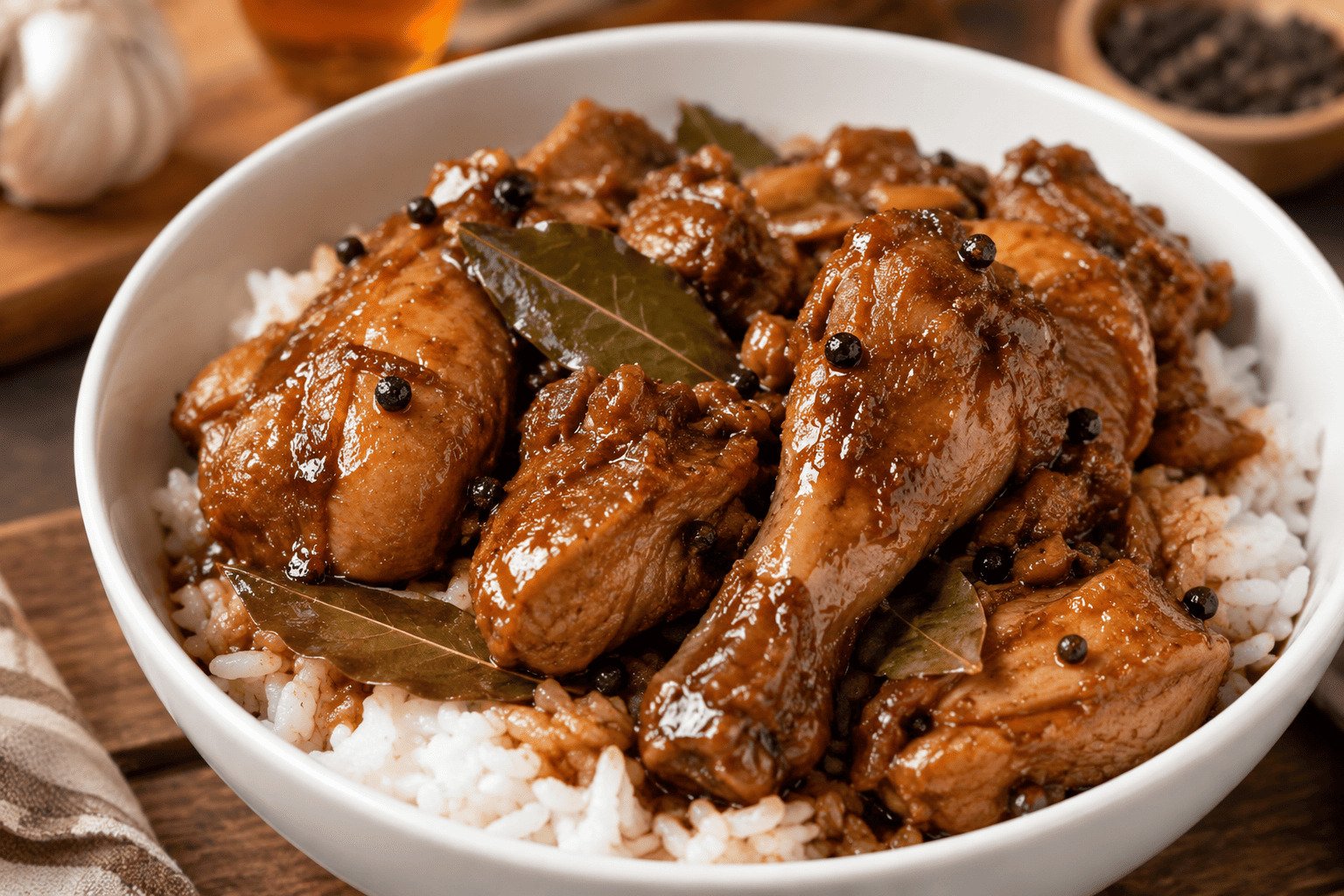
If you ask a Filipino in the Gulf to name the one dish that represents home, the answer is almost always adobo. Not because it is the most complex or the most festive Filipino dish — it is neither — but because it is the most personal. Every Filipino family has its own adobo recipe, and those recipes vary dramatically.
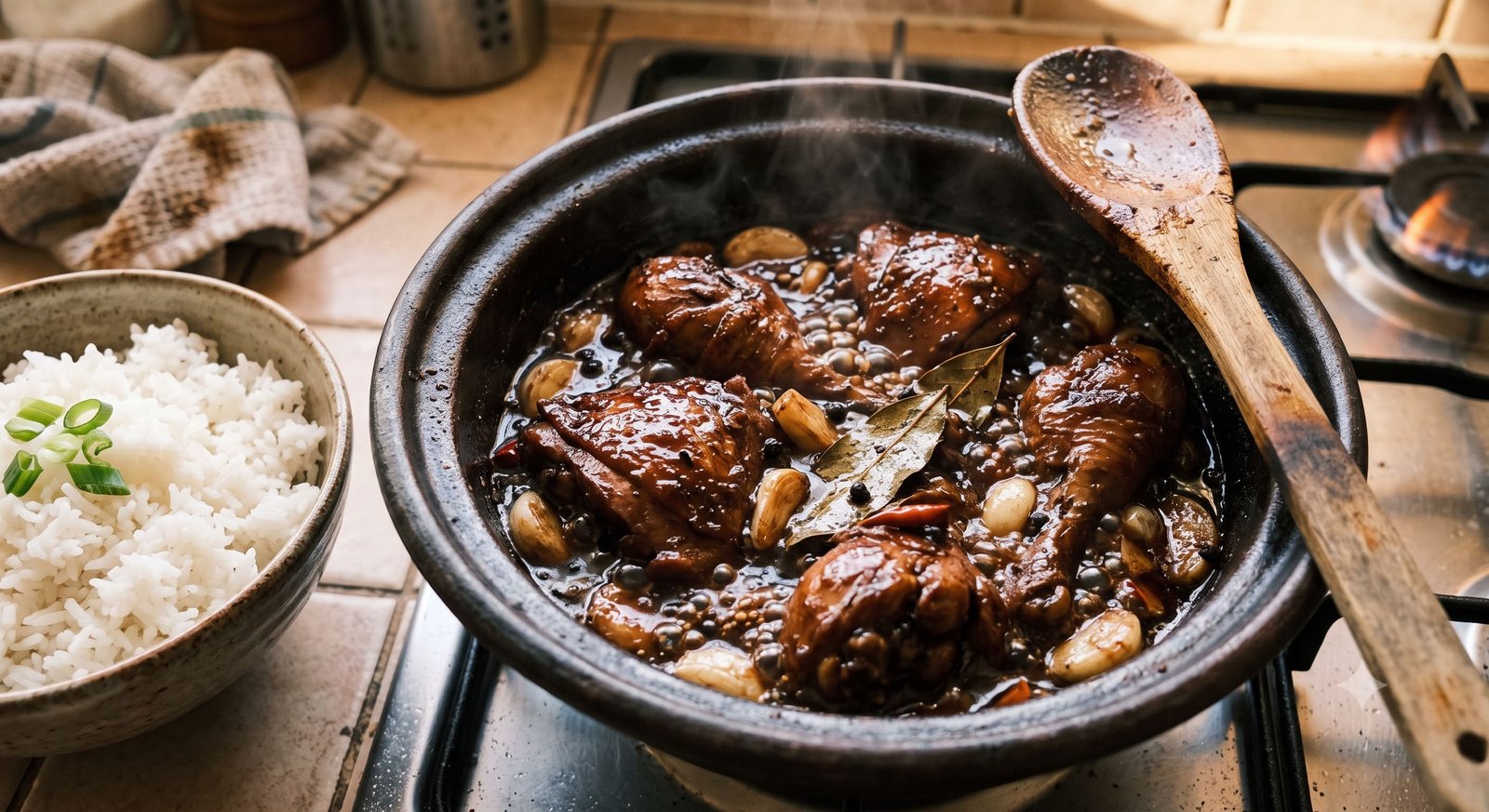
At its most basic, adobo is meat (chicken, pork, or both) braised in vinegar, soy sauce, garlic, bay leaves, and black peppercorns. From that simple foundation, the variations are endless. Some families add coconut milk, creating a richer, creamier version common in the southern Philippines. Others cook the adobo dry, reducing the sauce until the meat is caramelized and almost crispy. Some use cane vinegar, others use coconut vinegar, and the difference is significant — cane vinegar is sharper and more acidic, while coconut vinegar has a mellower, slightly sweet tang.
In the Gulf, adobo takes on an additional dimension. Pork is not widely available in most Gulf countries (though it can be found in designated sections of certain supermarkets in the UAE, Bahrain, and Qatar). Many Gulf-based Filipino cooks have adapted by making chicken-only adobo, which is traditional in parts of the Philippines anyway. Others have developed beef or fish adobo versions, and some have experimented with lamb — an ingredient abundant in the Gulf but rare in Filipino cooking back home.
The vinegar question is another Gulf adaptation. Philippine cane vinegar and coconut vinegar are available in Filipino grocery stores across the Gulf, but they are more expensive than locally available alternatives. Some cooks have started using locally sourced white vinegar or apple cider vinegar and adjusting the proportions to approximate the flavor they are used to. Purists insist on the real thing. Pragmatists make do. The debate, like all debates about adobo, is passionate and unresolved.
The Ingredient Hunt
The growth of the Filipino community in the Gulf has transformed the grocery landscape. Twenty years ago, finding calamansi, banana ketchup, or patis (fish sauce) in a Gulf supermarket would have been nearly impossible. Today, major supermarket chains in the UAE, Saudi Arabia, Qatar, and Bahrain stock dedicated Filipino sections. In cities with large Filipino populations — Abu Dhabi, Dubai, Jeddah, Al Khobar — standalone Filipino grocery stores carry everything from frozen milkfish (bangus) and longanisa sausages to ube (purple yam) extract and shrimp paste.
The availability of ingredients has improved steadily, but it is still not perfect. Fresh ingredients that are central to Filipino cooking — calamansi limes, fresh pandan leaves, green mangoes for salads, banana blossoms for soups — are often seasonal or inconsistent. Gulf-based Filipino cooks have developed a network of knowledge about where to find specific items: which store in Deira carries fresh calamansi, which Indian grocery in Sharjah stocks tamarind paste that works as a sinigang substitute, which butcher in Al Ain will cut pork the way you need it.
Some ingredients have been replaced through creative adaptation. Fresh tamarind, which is the traditional souring agent for sinigang, is not always available. Many Gulf-based cooks use tamarind powder, Knorr sinigang mix (a commercial product that is a kitchen staple), or even a combination of tomatoes and lemon juice to achieve a similar sour profile. The result is not identical to the original, but it is close enough to satisfy the craving — and over time, these adapted versions have become traditions in their own right.
Sunday Gatherings
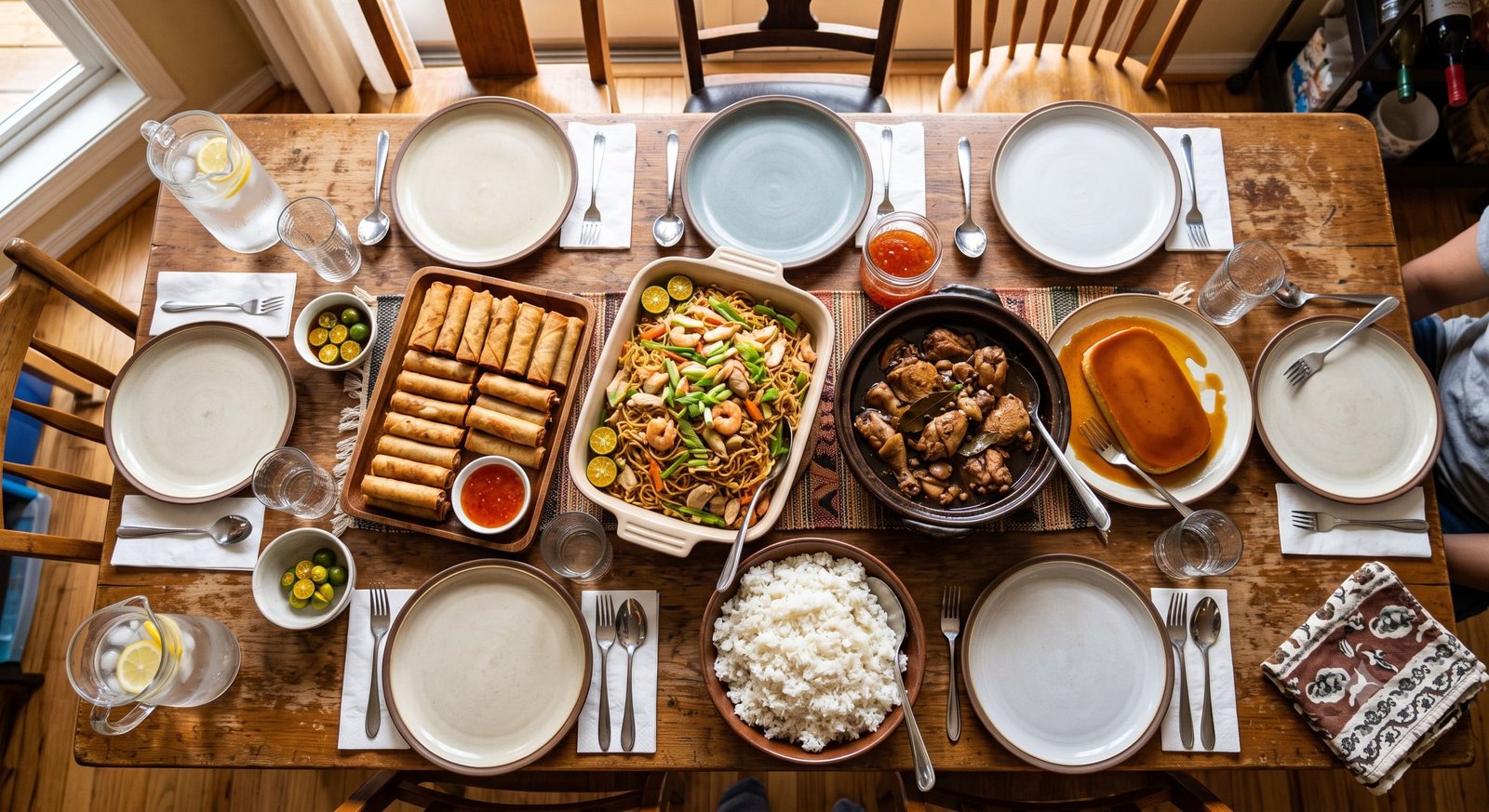
The Filipino community in the Gulf has built a rich social life around food, and the centerpiece is the Sunday gathering. After attending church — the Gulf has active Catholic congregations serving the Filipino community — families and friend groups gather for large communal meals that function as weekly reunions.
These Sunday lunches are elaborate. A typical spread might include pancit (stir-fried noodles), lumpia (spring rolls), adobo, rice, lechon kawali (crispy fried pork belly, in countries where it is available), and a dessert like leche flan or halo-halo. The food is prepared collectively — one person brings the pancit, another makes the lumpia, a third handles the rice and adobo. The contributions rotate week by week, ensuring that no single person bears the full burden of cooking.
For Filipino workers who live far from their families — and there are millions of them across the Gulf — these Sunday meals are a lifeline. They provide the warmth, noise, and togetherness of a family meal to people who may not have seen their own families for months or years. The conversation is a mix of Tagalog, Bisaya, and English. The laughter is constant. The food is homemade, abundant, and deeply comforting.
Birthday celebrations within the community are another major food event. A Filipino birthday in the Gulf almost always involves a large feast — far larger than the guest list might seem to require — with spaghetti (sweet-style, with banana ketchup in the sauce, a distinctly Filipino preparation that surprises the uninitiated), fried chicken, pancit, and a cake. The birthday spaghetti is so ubiquitous that it has become a running joke within the community: if you see a Filipino carrying a foil tray of sweet red spaghetti, someone nearby is turning a year older.
Sharing Food, Building Bridges
Filipino cooks in the Gulf are known for their extraordinary generosity with food. It is a cultural trait that transcends the Gulf context — in the Philippines, offering food to visitors, neighbors, and even strangers is a deeply ingrained social practice. In the Gulf, this generosity has become one of the primary ways Filipino workers build relationships across cultural lines.
Office potlucks are a common venue. In Gulf workplaces where Filipinos are part of the team, potluck lunches frequently feature Filipino dishes alongside Indian, Arab, and Western contributions. Lumpia and pancit have gained fans across nationalities, and adobo has become a dish that many non-Filipino Gulf residents have tried and enjoyed. The feedback loop works both ways: Filipino cooks in the Gulf have developed a taste for Arabic food, Indian biryani, and Pakistani chai, and these influences occasionally show up in their own cooking.
In domestic settings, Filipino caregivers, nannies, and household staff have quietly introduced Filipino flavors to Gulf families. A nanny who cooks adobo for the children, a caregiver who prepares sinigang for an elderly family member — these everyday acts of cooking have made Filipino food familiar to a generation of Gulf Arab families who might never have encountered it otherwise.
The cultural exchange goes deeper than individual dishes. The Filipino approach to food — generous, communal, practical, unfussy — resonates with Gulf values of hospitality and shared meals. In a region where many different cultures live and work side by side, food has become one of the most natural bridges between communities. And for the millions of Filipinos who call the Gulf home, the kitchen remains the one place where distance from the Philippines disappears entirely, one simmering pot of adobo at a time.