The Soul of Khaleeji Cooking
To understand Gulf cuisine is to understand its history as a global trading hub. The flavor profiles are built on a foundation of imported spices that have been integrated over centuries, creating a culinary identity unlike anything else in the Middle East.

The Spice Trade Legacy
The Arabian Gulf has been a crossroads of global trade for millennia. Long before oil was discovered beneath its deserts, the region's ports — from Muscat and Basra to Kuwait City and Muharraq — connected the spice routes of India, East Africa, and Southeast Asia with the Mediterranean world. Merchants carried cardamom from Kerala, saffron from Persia, cinnamon from Sri Lanka, and cloves from Zanzibar, and each of these ingredients left a permanent mark on the food of the Gulf.
What makes Khaleeji cuisine distinctive is not the use of any single spice but the particular way these imported ingredients were combined and adapted over generations. Gulf cooks developed their own spice blends — bezar, baharat, kabsa spice — that are related to but distinct from Indian or Levantine equivalents. A dish like machboos might remind you of a biryani at first glance, but the flavor is unmistakably Gulf: earthier, more aromatic, built around dried limes and turmeric rather than the green chilies and garam masala of the subcontinent.
This culinary identity was shaped by the environment as much as by trade. The harsh desert climate meant that preservation techniques — drying limes, smoking fish, fermenting dairy — became essential skills. These techniques produced some of the most distinctive ingredients in Khaleeji cooking, flavors that cannot be replicated with fresh substitutes.
Essential Gulf Spices
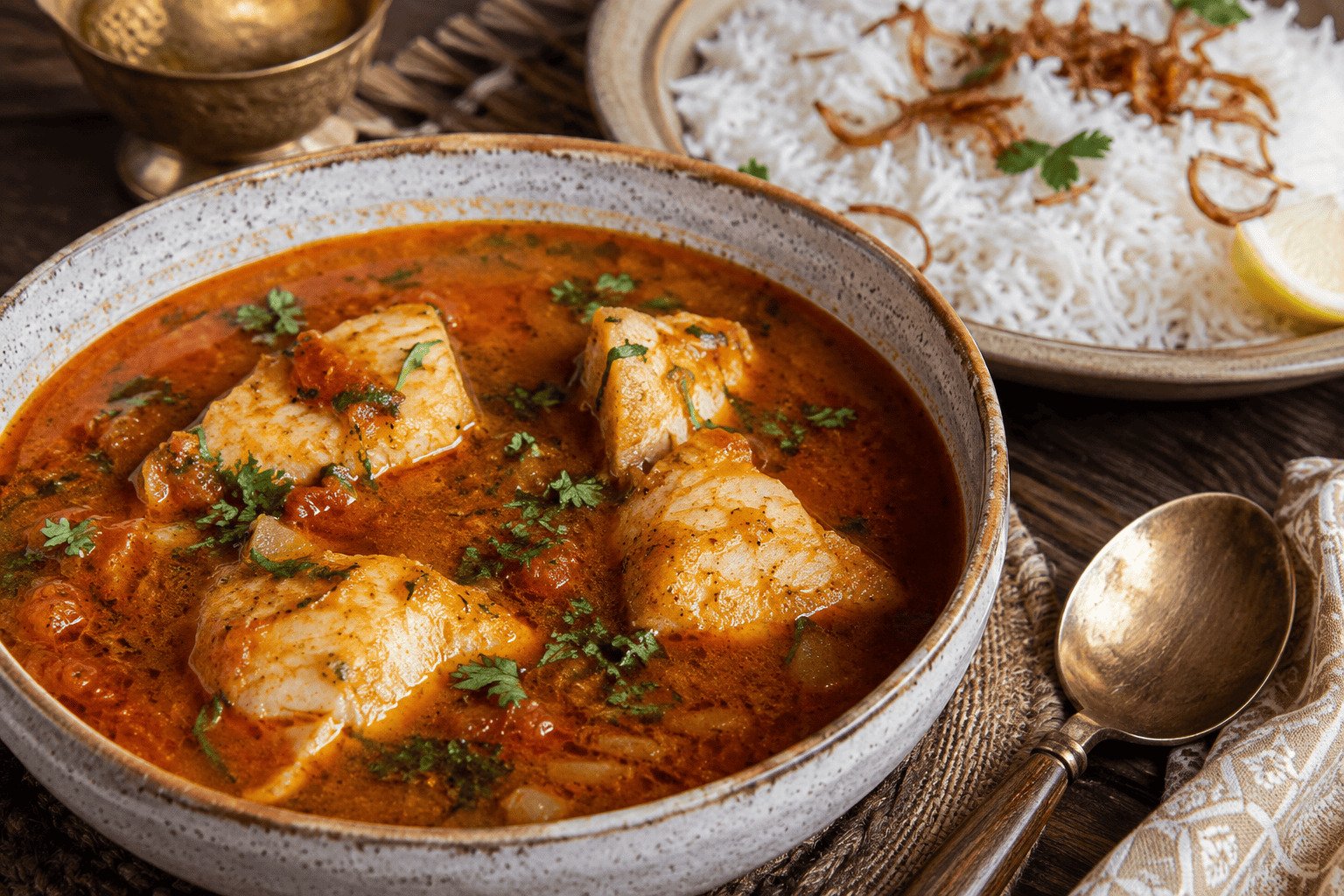
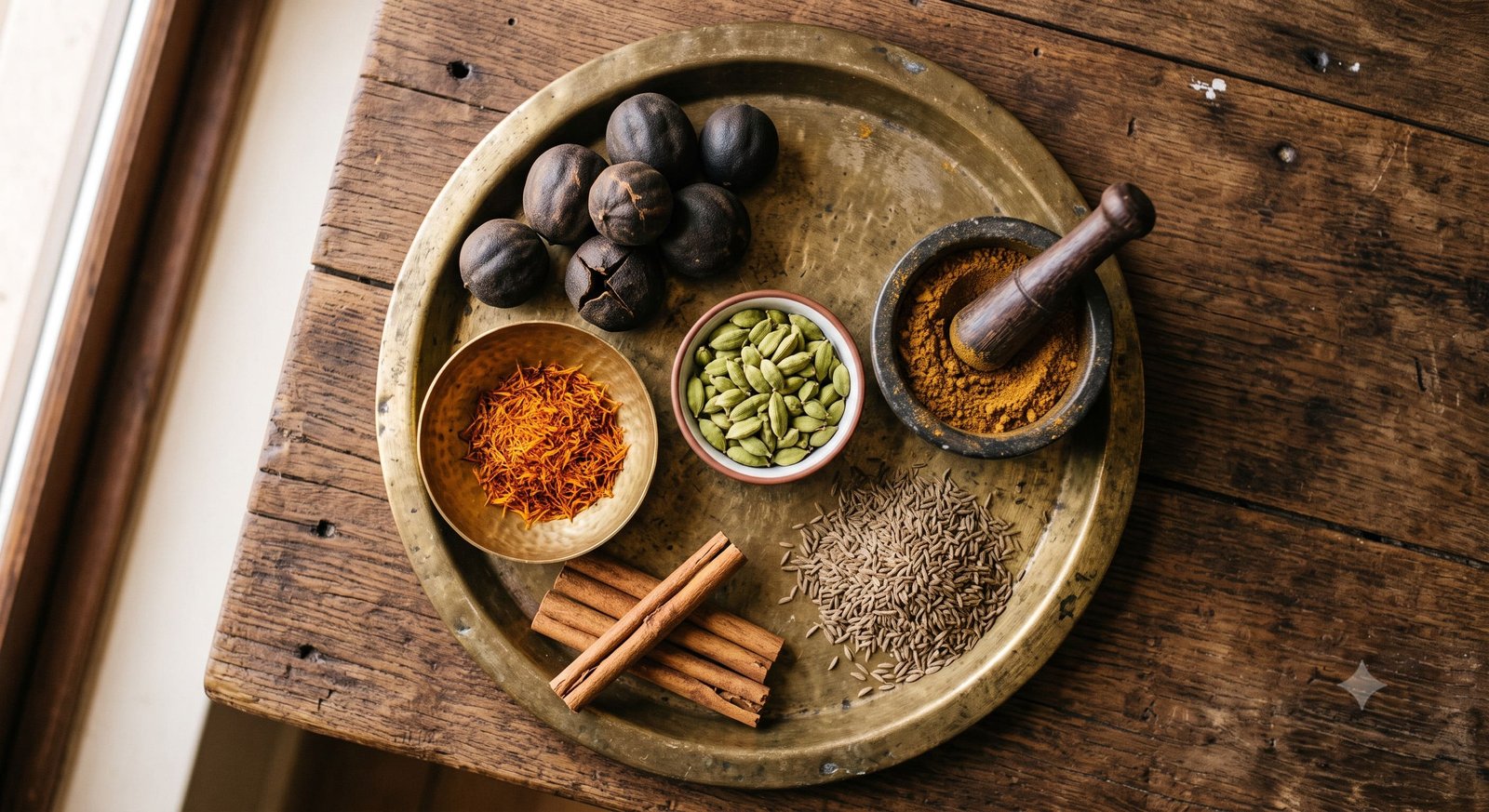
Loomi (Dried Black Lime): Perhaps the single most defining ingredient in Gulf cooking. Fresh limes are boiled in salt water and then dried in the sun until they turn hard and dark. The result is a deeply complex flavor — sour, slightly smoky, faintly bitter — that anchors stews, rice dishes, and soups across the region. Loomi is used whole (pierced with a knife so the flavor can seep out during cooking) or ground into a fine powder. There is no true substitute, and it is the ingredient that most often surprises people tasting Gulf food for the first time. You will find it in machboos, salona, harees, and dozens of other everyday dishes.
Bezar: The essential Gulf spice blend, and one that varies from family to family like a signature. The base typically includes cumin, coriander seeds, black pepper, cinnamon, and turmeric. From there, each household adds its own twist — some include dried chilies for heat, others add cloves, nutmeg, or dried rose petals for fragrance. In Oman, bezar tends to be heavier on black pepper. In Bahrain, you might find a stronger cinnamon presence. A family's bezar recipe is often passed down through generations, and many Gulf cooks consider store-bought versions a poor substitute for the home-ground blend.
Saffron: The Gulf uses saffron more generously than almost any other culinary tradition in the world. It appears in rice dishes, desserts, drinks, and even savory stews. Gulf saffron is typically sourced from Iran, and its quality is measured by the depth of its red color and the potency of its aroma. In traditional cooking, saffron threads are soaked in warm rosewater before being added to a dish, releasing both their golden color and their distinctive honey-like flavor. It is essential in dishes like balaleet (sweet vermicelli), muhalla (saffron crepes), and karak chai.
Cardamom: Used in both savory and sweet preparations, cardamom is the backbone of Gulf coffee (gahwa). Traditional Arabic coffee is made by lightly roasting green coffee beans with generous amounts of cardamom — sometimes in a ratio as high as one-to-one — producing a pale, fragrant brew that tastes nothing like Western coffee. Cardamom also appears in rice dishes, meat marinades, and desserts.
Turmeric: While turmeric is common across South and Southeast Asian cooking, it plays a particular role in the Gulf, where it is used primarily for color rather than flavor. Gulf cooks add turmeric to rice, soups, and stews to achieve a warm golden hue. It is almost always used alongside other spices rather than as a standalone flavoring.
Rice: The Heart of the Khaleeji Table
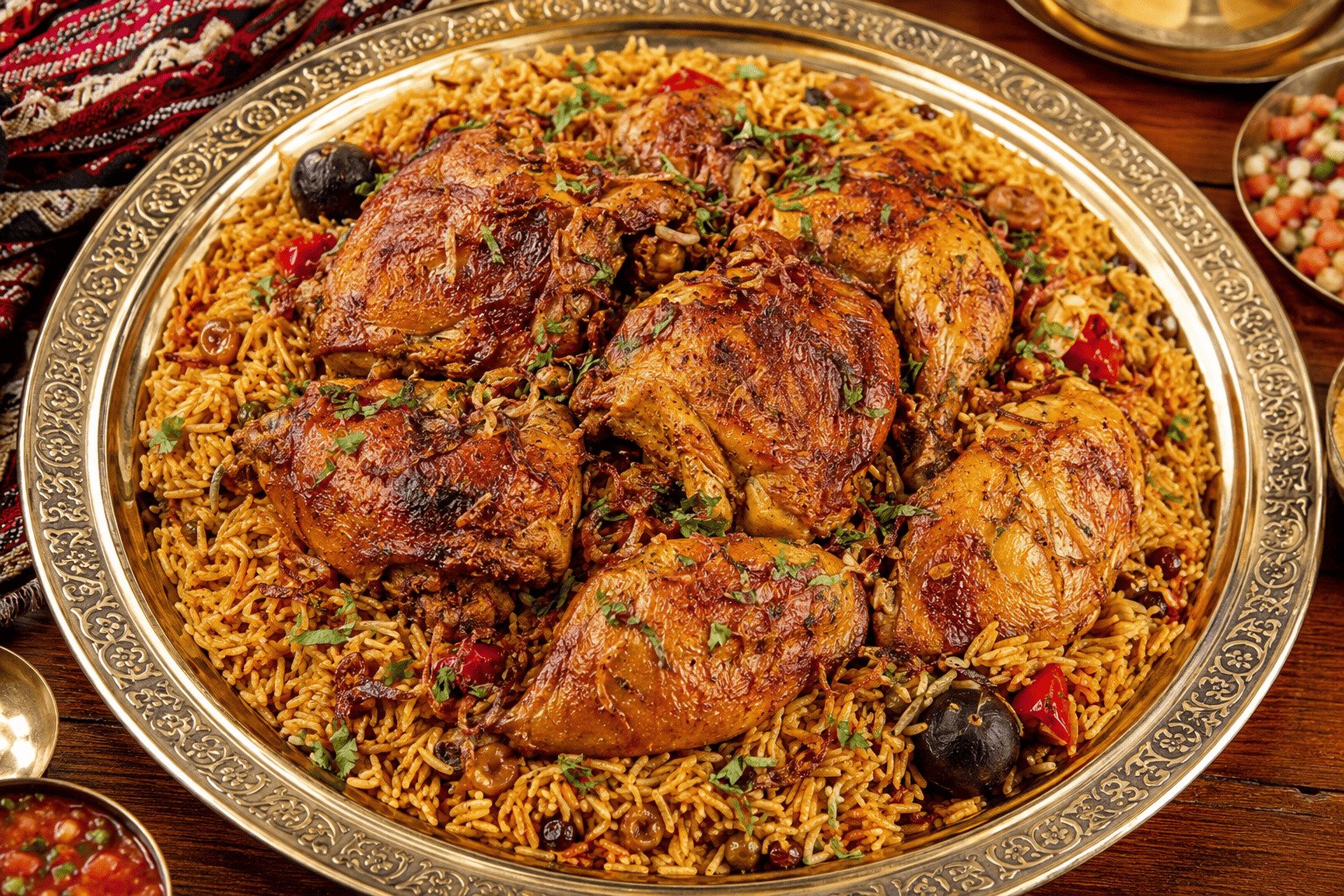
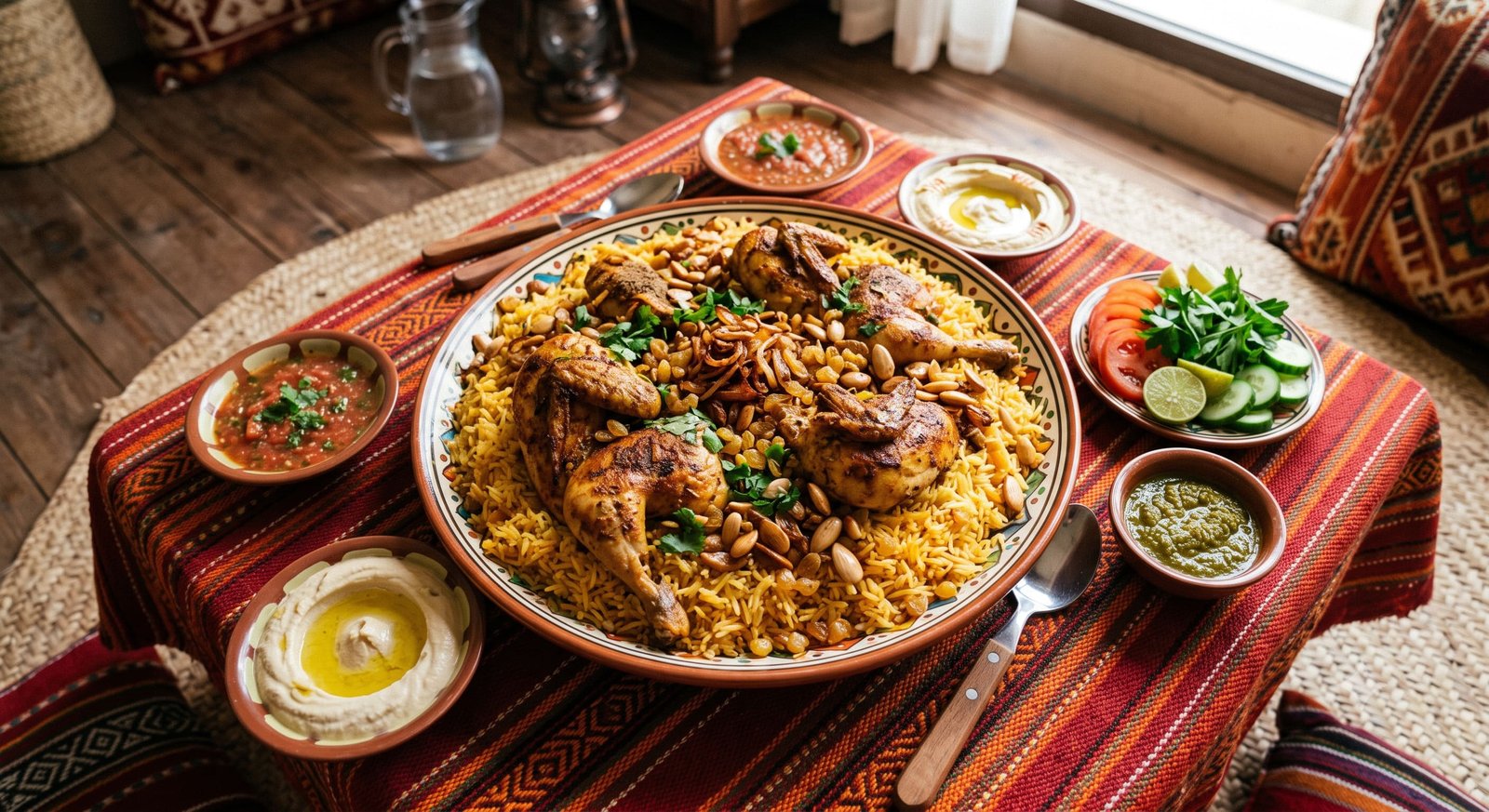
If spices are the soul of Khaleeji cooking, rice is its heart. The Gulf's most celebrated dishes — machboos, kabsa, majboos, mandi — are all built around long-grain rice cooked with meat, spices, and dried limes. The preference is overwhelmingly for basmati, imported from India and Pakistan, and Gulf cooks are famously particular about which brand they use.
The technique for Gulf rice dishes typically follows a pattern: meat is browned with onions and spices, then simmered in a broth until tender. The rice is cooked separately or in the same broth, absorbing the flavors of the meat and spices. The dish is then assembled — rice mounded on a platter, meat arranged on top — and garnished with fried onions, roasted nuts, or raisins. The result is a single-platter meal meant to be shared.
Each Gulf country has its own variation. In Kuwait, machboos tends to be made with more tomato and a slightly wetter consistency. In Saudi Arabia, kabsa often includes a smoky element from wood-fired cooking. In the UAE and Oman, the flavors tend to be milder, with a stronger emphasis on dried limes and saffron. These differences are subtle but meaningful to local cooks, and they reflect the diversity within what outsiders often mistakenly treat as a single, uniform cuisine.
The Communal Table
Gulf dining is inherently communal. The traditional sufra — a cloth or mat spread on the floor — brings family members together around shared platters. There are no individual plates in the traditional setup. Everyone eats from the same dish, using the right hand or pieces of bread to scoop food. This practice continues today, even in modern households with formal dining tables, particularly during family gatherings and religious occasions like Ramadan.
Hospitality in the Gulf is not a social nicety — it is a deeply held cultural obligation. Guests are served first and offered the best portions of meat. Arabic coffee and dates are presented immediately upon arrival, long before any main meal. Refusing food or drink is considered impolite, and hosts take genuine pride in the abundance of their table. It is common for Gulf families to prepare far more food than can possibly be eaten, and leftovers are shared with neighbors and extended family.
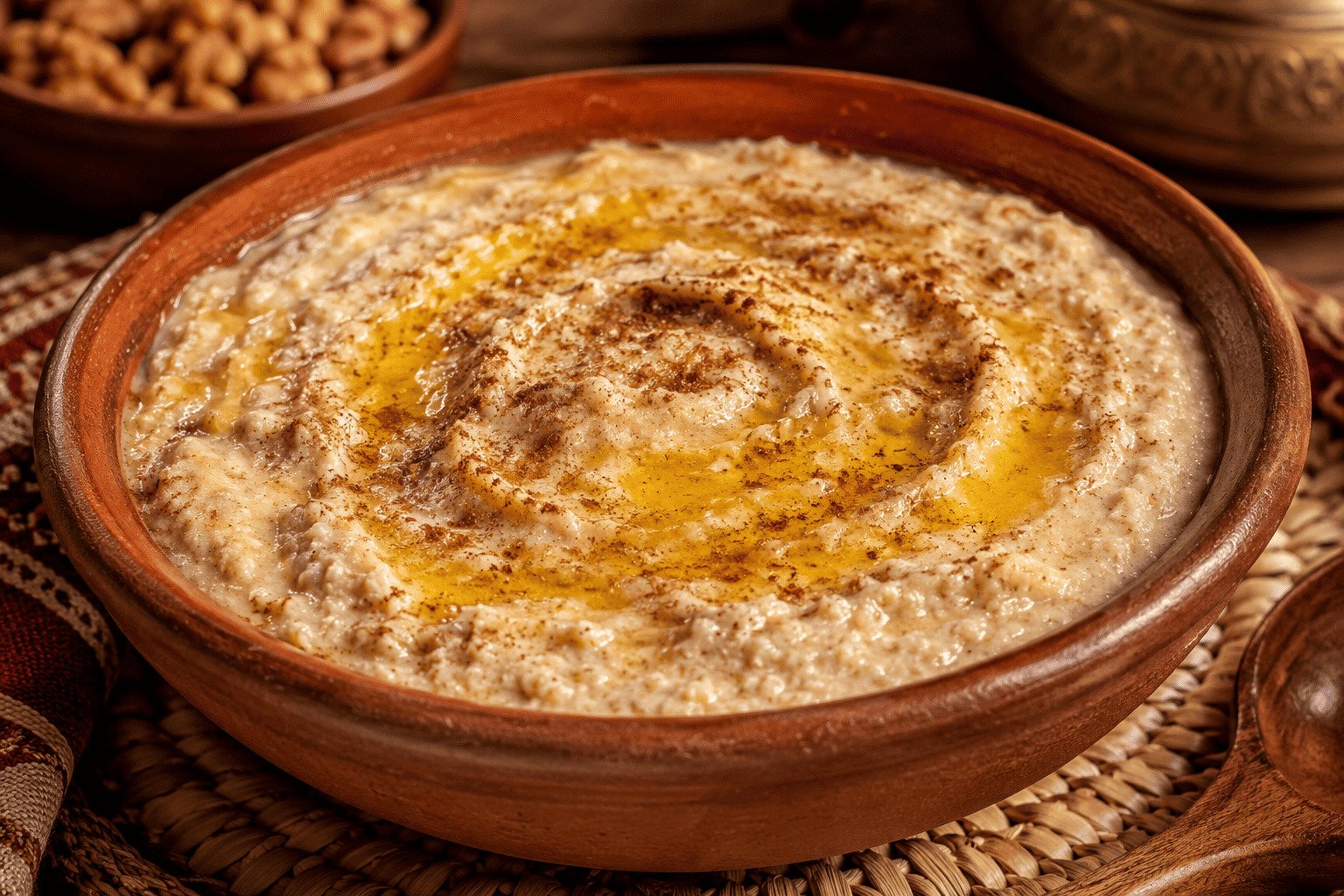
During Ramadan, the communal aspect of Gulf dining reaches its peak. Iftar — the meal that breaks the fast at sunset — is a major social event. Families gather, neighbors share food across apartment corridors, and mosques set up communal tables for anyone who needs a meal. The iftar spread typically begins with dates and water, followed by soups and appetizers, and then the main course of rice and meat. Desserts like luqaimat (fried dough balls drizzled with date syrup) and harees (a slow-cooked wheat and meat porridge) are specifically associated with this season.
Khaleeji Cooking Today
Khaleeji cuisine is experiencing a quiet renaissance. A new generation of Gulf-based food writers, bloggers, and chefs are documenting family recipes that were previously passed down only by word of mouth. Restaurants in Dubai, Riyadh, and Doha are beginning to serve elevated versions of traditional dishes, introducing Khaleeji flavors to diners who might otherwise never encounter them.
At the same time, the home kitchen remains the true custodian of this cuisine. The most authentic machboos, the best harees, the finest luqaimat — these are still made at home, by cooks who learned from their mothers and grandmothers, using bezar blends that have been in the family for generations. The recipes are rarely written down in precise measurements. A handful of this, a pinch of that, cook it until it smells right. This oral tradition is part of what makes Khaleeji cooking so difficult to replicate from a cookbook and so rewarding to learn from a person.
The Gulf's food story is also being shaped by its extraordinary diversity. In a region where expatriates often outnumber citizens, Khaleeji cooking exists alongside Indian, Pakistani, Filipino, Levantine, and East African food traditions. These cuisines have influenced each other in subtle ways — a Pakistani bezar that adds Gulf-style loomi, a Filipino adobo made with locally available vinegar, an Emirati dessert that borrows cardamom usage from Indian sweets. The result is a food culture that is traditional and modern, local and global, deeply rooted and constantly evolving.