Air Fryer Frozen Salmon: No Thawing, Timed by Thickness
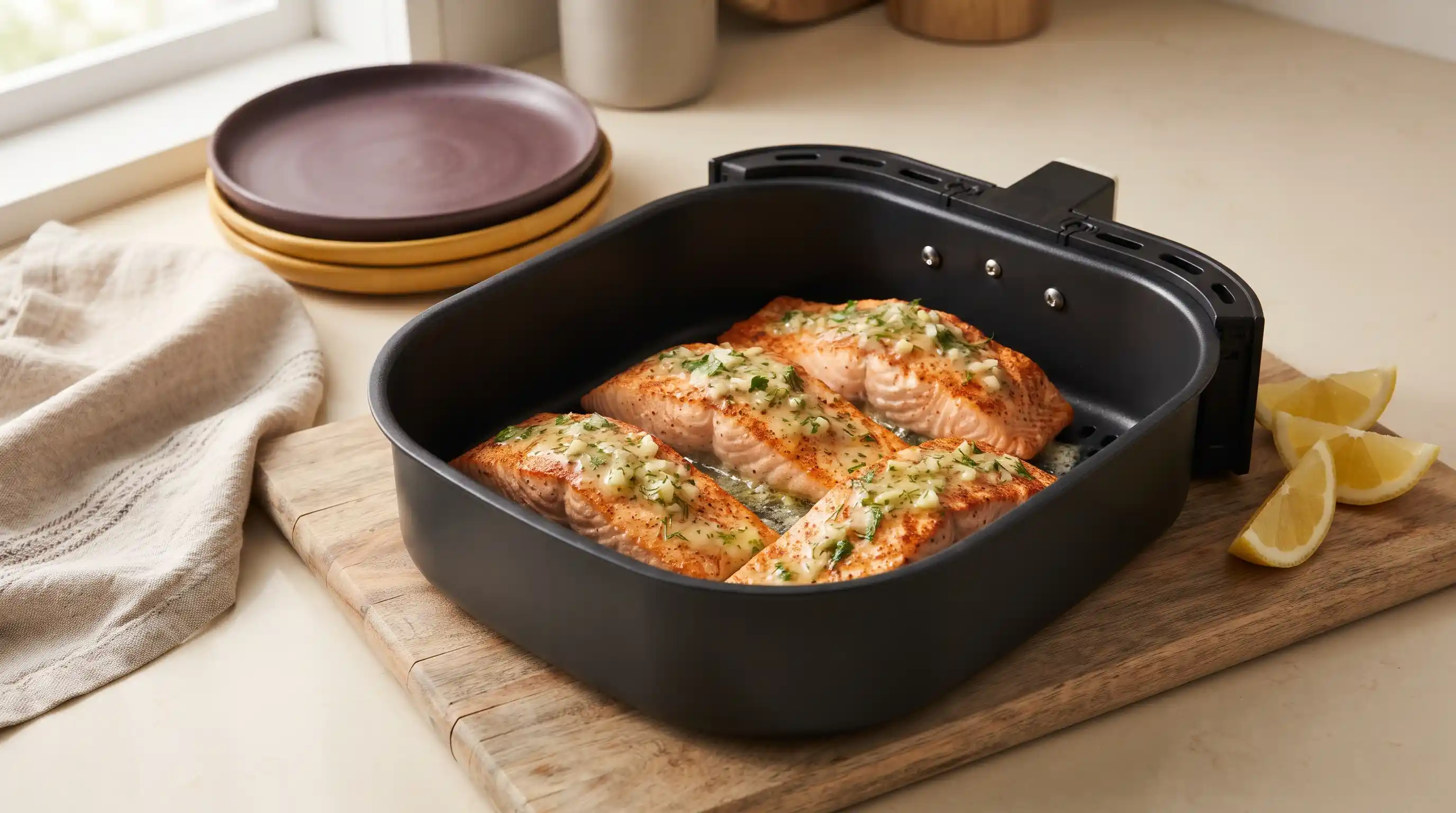
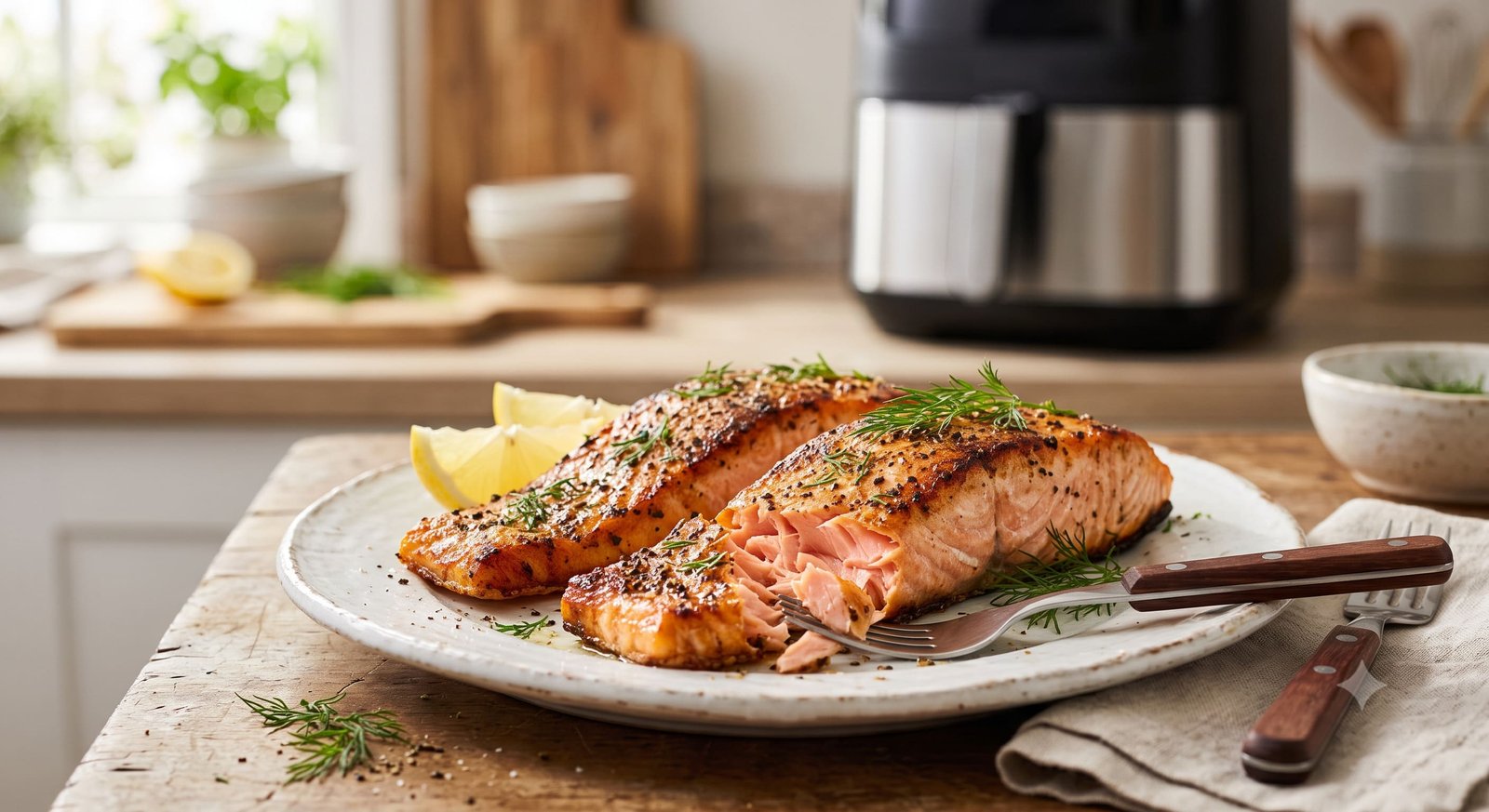
Frozen salmon fillets go straight into the air fryer, no thawing. They cook plain for 5 minutes, get a garlic and paprika paste once the surface has thawed, then finish in another 7 to 10 minutes. A thickness chart tells you the total time for anything from a thin tail piece to a thick loin.
You do not need to thaw salmon before it goes in the air fryer. A frozen fillet takes roughly one and a half times as long as a thawed one, and if you time it by thickness the outside stays moist while the centre catches up.
The fillets go in plain for 5 minutes, which melts the ice glaze and thaws the surface. Seasoning added at the start would slide off with that meltwater, so the garlic and paprika paste goes on once the fish is tacky. Then the fillets cook until the thickest point reaches 63°C (145°F).
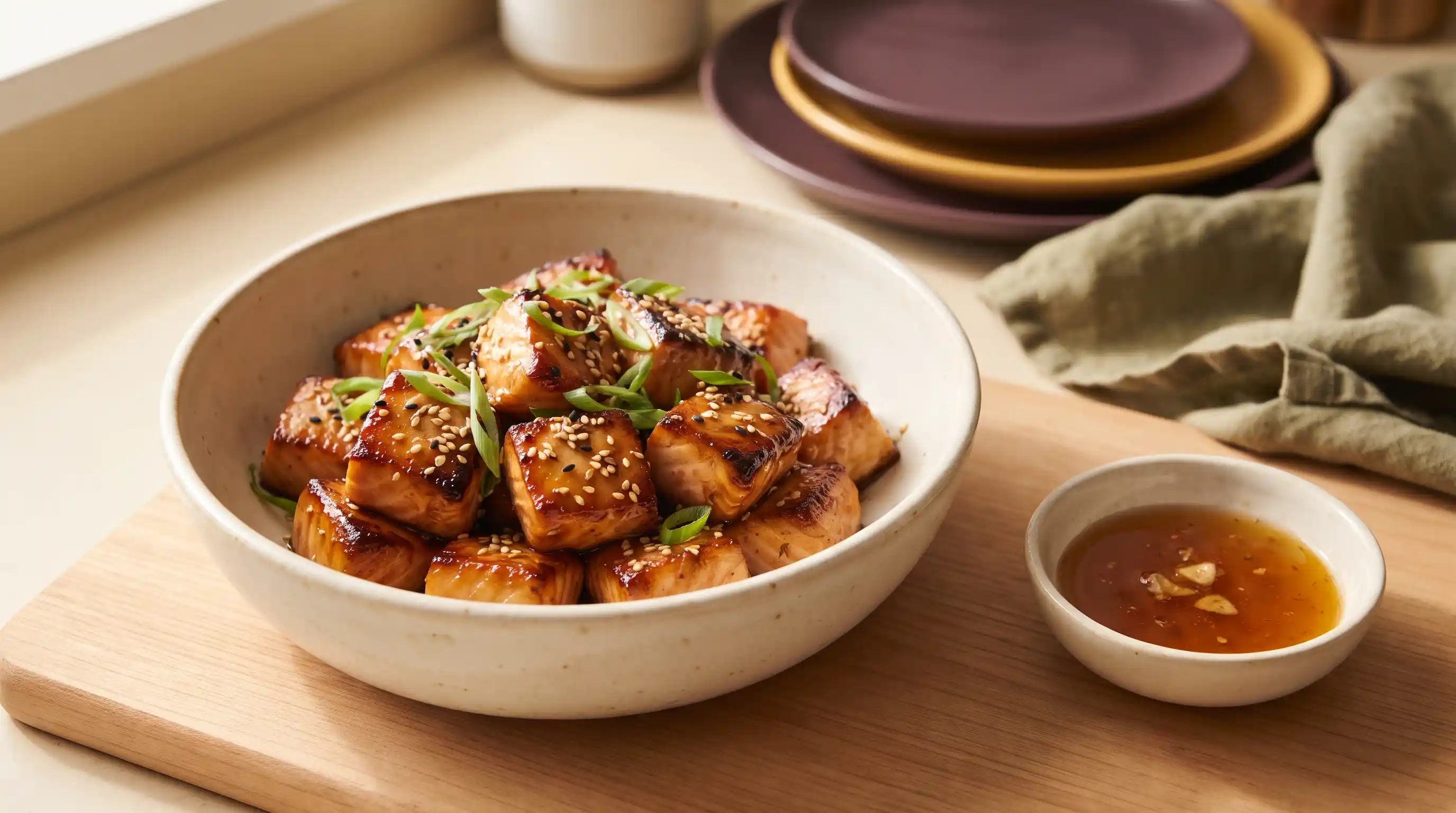
Cooking from frozen also suits the Gulf, where nearly all salmon is imported and the frozen, vacuum-packed portions in supermarket freezers are often the better-handled option. If your fillets are thawed or fresh, follow our air fryer salmon recipe for crisp-skinned fillets in 8 to 10 minutes. For cubes tossed in a sticky sauce, see honey garlic salmon bites.
| Fillet thickness | Typical weight | Total time from frozen | Add seasoning at |
|---|---|---|---|
| 1.5–2cm (¾ inch), tail piece | 110–140g (4–5 oz) | 10–12 min | 4 min |
| 2.5cm (1 inch), standard portion | 140–170g (5–6 oz) | 12–15 min | 5 min |
| 3–3.5cm (1¼ inch), thick centre cut | 170–225g (6–8 oz) | 15–18 min | 6 min |
| 4cm or more (1½ inch+), loin | 225g+ (8 oz+) | 18–22 min at 190°C (375°F) | 6 min |
| 2.5cm fillet, thawed (for comparison) | 140–170g (5–6 oz) | 8–10 min | Before cooking |
How long to cook frozen salmon in the air fryer by thickness
Time frozen salmon by its thickness, not its weight. Heat moves into a fillet from the top and bottom faces, so a long, thin 170g tail piece cooks far faster than a compact 170g centre cut. Measure the thickest point with a ruler before you start and use the chart above.
The USDA's general guidance is that frozen food takes about 50% longer to cook than thawed, and salmon follows that closely: a 2.5cm fillet that needs 8 to 10 minutes thawed needs 12 to 15 from frozen. The centre has to climb from freezer temperature, around -18°C (0°F), to 63°C (145°F), and most of the extra time goes on thawing the core.
For loins 4cm or thicker, turn the air fryer down to 190°C (375°F). At 200°C the outer layer dries out before heat reaches the middle of a thick piece. If one batch has mixed thicknesses, put the thick fillets in 3 to 4 minutes before the thin ones so they finish together.
A 5 to 6 litre basket holds four standard portions; in a 3 to 4 litre basket, cook two at a time. Oven-style models often run a minute or two slower, so trust the thermometer over the clock.
Is it safe to cook salmon from frozen?
Yes. Cooking fish straight from the freezer is safe as long as the thickest part reaches 63°C (145°F), the USDA safe minimum for fish. In a hot air fryer the fish moves quickly through the 4 to 60°C (40 to 140°F) danger zone, rather than sitting in it for hours the way a fillet left to thaw on the counter does.
Take vacuum-packed fish out of its pack before it starts to thaw; the FDA flags thawing fish in reduced-oxygen packaging as a botulism risk. And do not leave frozen salmon on the worktop to soften. In a Gulf kitchen in summer, the outside of a fillet can sit at room temperature for hours while the middle is still frozen.
A probe thermometer is the most reliable check. Frozen fillets cook less evenly than thawed ones, so the edges can look done while the middle is still cold. Push the probe in from the side so the tip sits in the centre of the thickest part.
Why season frozen salmon after the first 5 minutes
A frozen fillet is coated in a thin glaze of ice, which manufacturers add to stop the fish drying out in the freezer. In the first few minutes in the air fryer that ice melts, and anything sitting on top of it (salt, spices, a glaze) runs off into the basket.
After 5 minutes the surface has thawed and turned slightly tacky, so an oil-based paste sticks and forms a light crust. Mixing the spices into oil rather than sprinkling them dry also stops the fan blowing loose powder around the basket.
Sauces containing sugar, such as honey, a sweet chilli glaze or bottled teriyaki-style sauces, go on even later: brush them on for the final 3 minutes only, or they burn. If you are using a bottled sauce, check the label, because many teriyaki sauces contain alcohol.
Skin-on or skinless frozen fillets?
Both work, with the same timings. Skin-on fillets go in skin-side down: the skin shields the underside from the basket and the fish releases more easily. Do not expect the shattering crisp skin you get from fresh fillets, though. The meltwater from the ice glaze collects under the fish and softens the skin, so if crisp skin is what you want, thaw the fish and use our fresh salmon fillet method.
Skinless fillets brown slightly more underneath and flake easily into rice bowls. Oil the basket or use a perforated liner so the flesh does not tear when lifted.
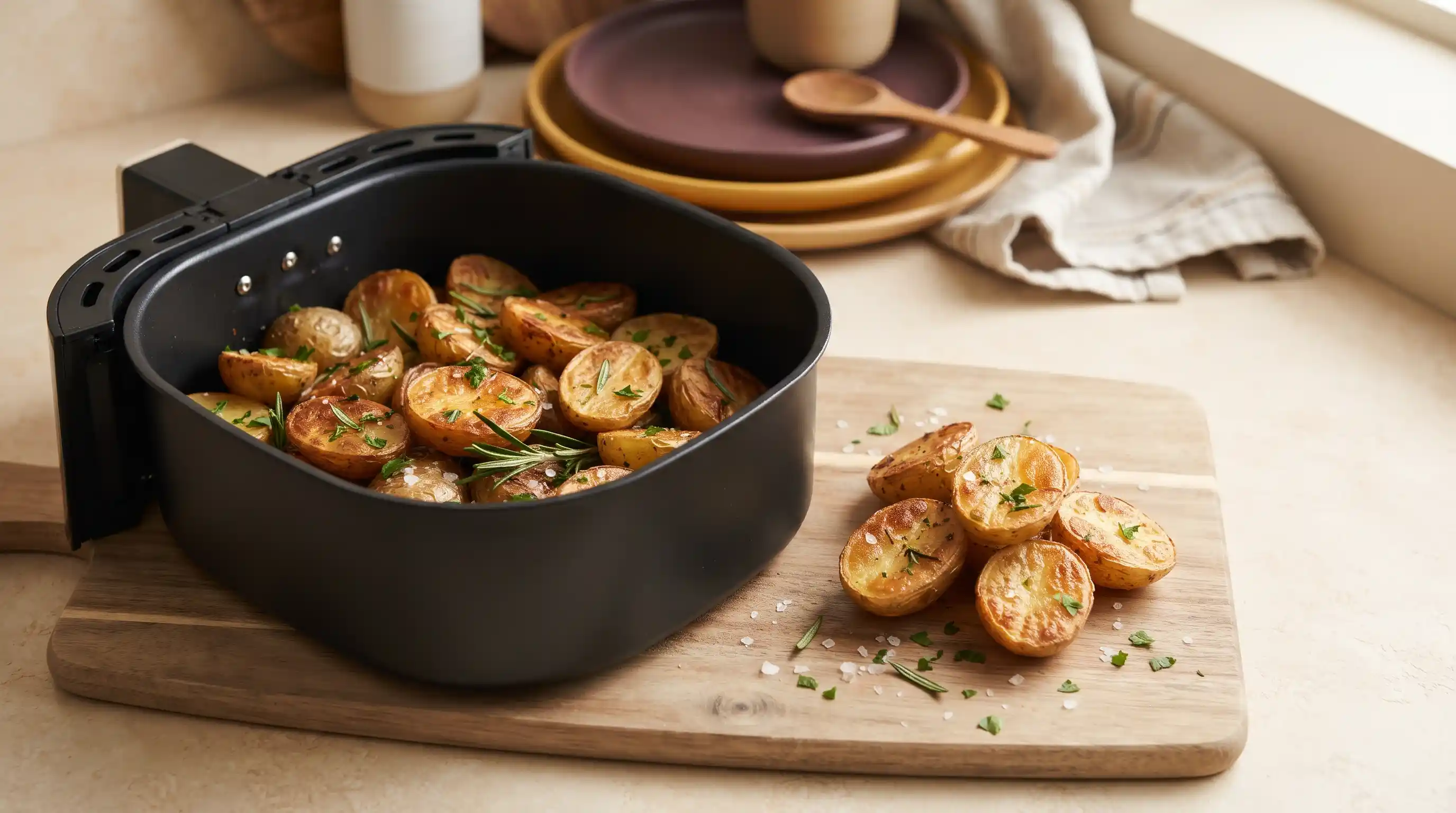
For a full dinner from the same machine, roast air fryer baby potatoes first and keep them warm, then cook the salmon. Our frozen food cooking times chart covers fish fingers, salmon burgers and other freezer staples.
Air Fryer Frozen Salmon
Ingredients
Salmon
- 4 frozen salmon fillets (140–170g (5–6 oz) each, about 2.5cm (1 inch) thick, skin-on or skinless, individually frozen)
- 1 tbsp olive oil (divided)
- 1 tsp garlic powder
- 1 tsp sweet or smoked paprika
- ½ tsp dried dill or parsley
- ¾ tsp fine salt
- ¼ tsp black pepper
Lemon garlic butter (optional)
- 2 tbsp butter
- 1 clove garlic (finely grated)
- 1 lemon (juice of half, the rest cut into wedges)
- 1 tbsp fresh parsley (chopped)
Instructions
- 1
Take the fillets out of their vacuum packs while still frozen. If two are frozen together, hold them under cold running water for 30 to 60 seconds and prise them apart with a butter knife.
Never thaw vacuum-packed fish inside its sealed pack. The US FDA advises opening it first, because the low-oxygen pack can let Clostridium botulinum grow as the fish warms.
- 2
Preheat the air fryer to 200°C (400°F) for 3 minutes. Brush loose ice crystals off the fillets and pat the surfaces with paper towel. There is no need to rinse them.
- 3
Lightly oil the basket. Place the fillets skin-side down (or presentation side up if skinless) with at least 2cm between them, and brush the tops with ½ tbsp of the oil.
- 4
Air fry for 5 minutes. Meanwhile, stir the remaining 1 tbsp oil with the garlic powder, paprika, dill, salt and pepper to make a loose paste.
- 5
Pull out the basket. The surface of the fish should now be thawed and slightly tacky. Brush the seasoning paste over the tops and sides.
- 6
Air fry for another 7 to 10 minutes for 2.5cm (1 inch) fillets, or use the thickness chart for other sizes. Check the thickest part with a probe thermometer: it is done at 63°C (145°F), when the flesh has turned opaque and separates into flakes when pressed with a fork.
If the centre is still translucent or below temperature, cook in 2-minute bursts and check again.
- 7
While the salmon finishes, melt the butter with the grated garlic for 30 seconds in the microwave or a small pan, then stir in the lemon juice and parsley.
- 8
Rest the salmon for 3 minutes, spoon over the lemon garlic butter and serve with lemon wedges. If you prefer it skinless, the skin lifts away cleanly once cooked.
Equipment
Air fryer · Pastry brush · Small bowl · Probe thermometer · Fish slice or wide spatula
Tips
- Buy individually frozen portions rather than a frozen block. Separate fillets cook evenly; a block has to be thawed to come apart.
- Measure the thickest point of one fillet with a ruler before cooking, then read the time off the chart.
Troubleshooting
- Outside done, middle still cold: the fillet was thicker than the time allowed for. Cook in 2-minute bursts until 63°C (145°F), and for loins over 4cm use 190°C (375°F).
- Seasoning slid off: it went on before the ice glaze melted. Wait until the 5-minute mark and use an oil-based paste.
- Pale surface with water pooled in the basket: fillets were too close together or had heavy ice. Brush off ice, pat dry, and leave 2cm between pieces.
- Dry and chalky with white beads on top: overcooked. Check a thermometer 2 minutes before the end of the chart time next time.
Substitutions
- For a dairy-free version, warm the garlic in olive oil instead of butter. Ghee is not dairy-free, though it works if you only want a nuttier flavour.
- Swap the dill for za'atar, or the paprika for sumac and a pinch of chilli, for a Levantine-style crust.
- Frozen trout fillets work with the same method; they are usually thinner, so use the tail-piece row of the chart.
- No probe thermometer? Twist a fork into the thickest part: the flesh should be opaque right to the centre and flake easily. This is less reliable than a thermometer with frozen fish, so give borderline fillets another 2 minutes.
Variations
- Honey mustard: after 5 minutes, brush on 1 tbsp honey mixed with 1 tbsp wholegrain or English mustard and 1 tsp oil. Check the label, because some Dijon-style mustards contain alcohol.
- Sumac and za'atar: replace the paprika and dill with 1 tsp sumac and 1 tsp za'atar, then finish with olive oil and lemon instead of butter.
- Sesame soy: brush with 1 tbsp halal soy sauce, 1 tsp sesame oil and 1 tsp honey for the final 3 minutes, then scatter with sesame seeds.
What to Serve With It
- Serve with basmati rice and roasted asparagus or green beans for a 20-minute dinner.
- Flake over a salad of cucumber, tomato, herbs and a lemon tahini dressing.
- Pair with air fryer baby potatoes and a spoon of garlic yoghurt.
- Add to a grain bowl with quinoa, avocado, pickled red onion and edamame.
Storage
Refrigerate cooked salmon in an airtight container within 2 hours and eat within 2 days. You can freeze cooked leftovers within 2 hours of cooking for up to 3 months, though the flakes turn softer once thawed.
Reheating
Reheat in the air fryer at 160°C (320°F) for 3 to 5 minutes until hot through, or flake it cold into salads and bowls, which avoids drying it out. The microwave makes salmon rubbery.
Make Ahead
Mix the seasoning paste and the lemon garlic butter up to 3 days ahead and keep them in the fridge. The salmon itself is best cooked just before eating.
Frequently Asked Questions
Can you cook frozen salmon in the air fryer without thawing it?
Yes. Put the fillets in straight from the freezer at 200°C (400°F). Cook them plain for 5 minutes so the ice melts, brush on oil and seasoning, then cook until the thickest part reaches 63°C (145°F). A 2.5cm (1 inch) fillet takes 12 to 15 minutes in total.
How long do you cook frozen salmon in the air fryer?
A standard 2.5cm (1 inch) fillet of 140 to 170g takes 12 to 15 minutes at 200°C (400°F). Thin tail pieces take 10 to 12 minutes, thick 3 to 3.5cm centre cuts take 15 to 18, and loins over 4cm take 18 to 22 minutes at 190°C (375°F).
Do I need to rinse frozen salmon before air frying?
No. Rinsing adds more water to the surface. Brush off any loose ice crystals and pat the fillets with paper towel, then cook. The thin ice glaze melts in the first few minutes, which is why the seasoning goes on after 5 minutes.
How do I know when frozen salmon is cooked?
The thickest part should read 63°C (145°F) on a probe thermometer, the flesh should be opaque all the way through, and it should separate into flakes when pressed with a fork. Frozen fillets cook less evenly than thawed ones, so always check the centre, not the edges.
How long do frozen salmon burgers take in the air fryer?
Most frozen salmon burgers take 10 to 12 minutes at 200°C (400°F), flipped halfway, but follow the timing on the pack because thickness varies. They are done when the centre is hot and reads at least 63°C (145°F).