Air Fryer Vegetable Recipes with a Time and Temperature Chart
Most vegetables air fry at 200°C (400°F) in 6 to 22 minutes, cut into even pieces, tossed in about 1 tablespoon of oil per 450g (1 lb) and cooked in a single layer with a shake halfway. Below is a chart for 22 vegetables, short recipes for the everyday ones, and links to full recipes for the vegetables that need more than a few lines.
How to cook vegetables in an air fryer
An air fryer is a small, powerful fan oven. Hot air moving fast over the surface of a vegetable dries it, and once the surface is dry it browns. Almost every rule below comes back to that: anything that keeps water on the surface, or traps steam around the food, gives you soft, pale vegetables. If you want the mechanics in more detail, our explainer on how an air fryer works covers the fan, the element and why shaking matters.
The method that works for nearly every vegetable:
- Cut evenly. Pieces of the same size cook at the same rate. For most vegetables, aim for 2 to 3cm (about 1 inch) pieces or 1cm-thick batons.
- Dry thoroughly. Spin or pat washed vegetables dry. Surface water has to evaporate before browning can start.
- Oil lightly. Use about 1 tablespoon of oil per 450g (1 lb). It conducts heat into the surface and helps seasoning stick. More than that drips into the drawer and smokes.
- Preheat. Three minutes at 200°C (400°F) is enough for most basket models. With cook times under 10 minutes, a cold start throws the timing off.
- Single layer. A 5 to 6 litre basket takes about 450g of most vegetables in one loose layer. Pile them deeper and the bottom layer steams.
- Shake halfway. This turns the pieces and moves the ones from the centre to the hotter edges.
- Salt at the right time. For dense vegetables (carrots, broccoli, Brussels sprouts, potatoes) salt before cooking. For watery ones (courgette, mushrooms, aubergine, tomatoes) salt after cooking, because salt draws out water that then steams them.
Doneness looks the same across most vegetables: browned edges, a centre a knife slides into with little resistance, and no liquid pooling in the drawer.
Air fryer vegetable cooking times chart
All times are for a preheated 5 to 6 litre basket air fryer with about 450g (1 lb) of vegetables in one layer. For a compact 3 to 4 litre basket, cook half the amount and check 1 to 2 minutes early. For an oven-style air fryer with racks, add 2 to 3 minutes and swap rack positions halfway.
| Vegetable | Cut | Temperature | Time |
|---|---|---|---|
| Broccoli | 3–4cm florets | 200°C (400°F) | 8–10 min |
| Tenderstem broccoli | Whole stems | 200°C (400°F) | 6–8 min |
| Carrots | 1cm batons, 7cm long | 200°C (400°F) | 14–18 min |
| Baby carrots | Whole | 200°C (400°F) | 15–18 min |
| Courgette (zucchini) | 1.5cm half-moons | 200°C (400°F) | 10–12 min |
| Green beans | Trimmed, whole | 200°C (400°F) | 8–10 min |
| Brussels sprouts | Halved | 190°C (375°F) | 14–18 min |
| Peppers | 2–3cm strips or chunks | 200°C (400°F) | 8–10 min |
| Aubergine (eggplant) | 2.5cm cubes | 200°C (400°F) | 12–15 min |
| Okra | Whole, tops trimmed | 200°C (400°F) | 10–12 min |
| Corn on the cob | Cobs halved | 200°C (400°F) | 12–15 min |
| Butternut squash | 2cm cubes | 200°C (400°F) | 15–20 min |
| Cherry tomatoes | Whole | 200°C (400°F) | 5–7 min |
| Cabbage | 3cm wedges, core left on | 190°C (375°F) | 12–15 min |
| Asparagus | Medium spears | 200°C (400°F) | 6–8 min |
| Mushrooms | Halved | 200°C (400°F) | 10–11 min |
| Onions | 8 wedges per onion | 190°C (375°F) | 14–18 min |
| Cauliflower | Bite-size florets | 200°C (400°F) | 13–15 min |
| Chickpeas (canned) | Drained and dried | 200°C (400°F) | 15–18 min |
| Potatoes | 2.5cm cubes | 200°C (400°F) | 18–22 min |
| Baby potatoes | Halved | 200°C (400°F) | 15–18 min |
| Sweet potato | 2cm cubes | 200°C (400°F) | 12–15 min |
For whole baked potatoes and sweet potatoes, which take 35 to 45 minutes, see the full recipes linked further down.
Quick air fryer vegetable recipes
Each of these serves 2 to 3 as a side and starts with about 450g (1 lb) of vegetables, 1 tablespoon of oil and ½ teaspoon of salt unless stated. Follow the chart for time and temperature.
Broccoli with lemon and chilli
Cut florets to 3 to 4cm and slice the stalk into 1cm coins; peeled stalk is sweet and cooks in the same time. Toss with oil, salt and ½ teaspoon of chilli flakes. Small florets char fast at the tips, which is the point, but anything smaller than 2cm will burn, so keep pieces even. Finish with lemon zest and a squeeze of juice. Done when the floret tops are dark brown at the edges and the stalks are tender.
Honey cumin carrots
Cut carrots into 1cm batons. Toss with oil, salt and ½ teaspoon of ground cumin and cook 12 minutes, then drizzle with 2 teaspoons of honey or date syrup, shake and cook 2 to 4 minutes more. Adding the honey at the start burns it before the carrots soften. Done when a knife slides through the thickest baton and the edges are caramelised.
Courgette with za'atar
Cut courgettes into 1.5cm half-moons. Toss with oil only and cook 10 to 12 minutes, shaking once. Season with salt and 1 teaspoon of za'atar after cooking, while still hot. Courgette is mostly water, and salting early leaves it limp. Done when the cut faces are golden and the flesh is tender but still holding its shape.
Garlic green beans
Trim the stem ends and toss the beans with oil and salt. Cook 8 to 10 minutes, shaking once, until blistered in spots. Meanwhile, warm 1 tablespoon of olive oil with 1 grated garlic clove, then pour over the hot beans with a few toasted flaked almonds. Done when the beans are wrinkled in places and bend without snapping.
Crispy Brussels sprouts
Trim the bases and halve the sprouts, keeping loose outer leaves (they turn into crisp flakes). Toss with oil and salt and cook at 190°C (375°F) for 14 to 18 minutes, shaking twice. The lower temperature lets the dense centres cook before the leaves burn. Finish with ½ teaspoon of sumac or a drizzle of pomegranate molasses. Done when a knife slides into the centre of the largest half.
Charred peppers
Use red, yellow or orange peppers; green ones taste more bitter once charred. Cut into 2 to 3cm strips, toss with oil, salt and ½ teaspoon of smoked paprika and cook 8 to 10 minutes until blistered with dark spots. They are good in wraps, over hummus or with grilled meat.
Spiced aubergine
Cut a medium aubergine (about 350g) into 2.5cm cubes. Aubergine soaks up oil like a sponge, so use 2 tablespoons and toss well so every cube is coated. Add ½ teaspoon each of ground cumin and coriander. Cook 12 to 15 minutes, shaking twice, then salt. Done when the cubes are browned outside and creamy all the way through when pressed. Serve with garlic yoghurt and chopped mint.
Crispy okra
Okra (bamia) is easy to find fresh in Gulf markets all year. Rinse and dry it completely, then trim just the stem caps without cutting into the pods, which keeps the slippery juice inside. Toss whole pods with oil, salt and ½ teaspoon of chilli powder or chaat masala and cook 10 to 12 minutes, shaking twice. For crispier okra, halve the pods lengthways, toss in 1 tablespoon of chickpea flour after the oil and cook 8 to 10 minutes. Done when the ridges are browned and the pods are tender.
Corn on the cob
Cut cobs in half to fit the basket, brush with oil and cook 12 to 15 minutes, turning once, until the kernels are spotted brown. Brush with butter mixed with chilli powder and lime zest, or with a little tahini and lemon. Shorter frozen half-cobs work too: add 3 to 4 minutes.
Vegetables with their own full recipe
Some vegetables have enough technique to them that a few lines do not cover it. These have full recipes with ingredients, step-by-step methods and their own time charts.
- Chickpeas. They roast plain for 10 minutes before the oil and spices go on, so they crunch right through. See our crispy air fryer chickpeas recipe for six seasoning blends.
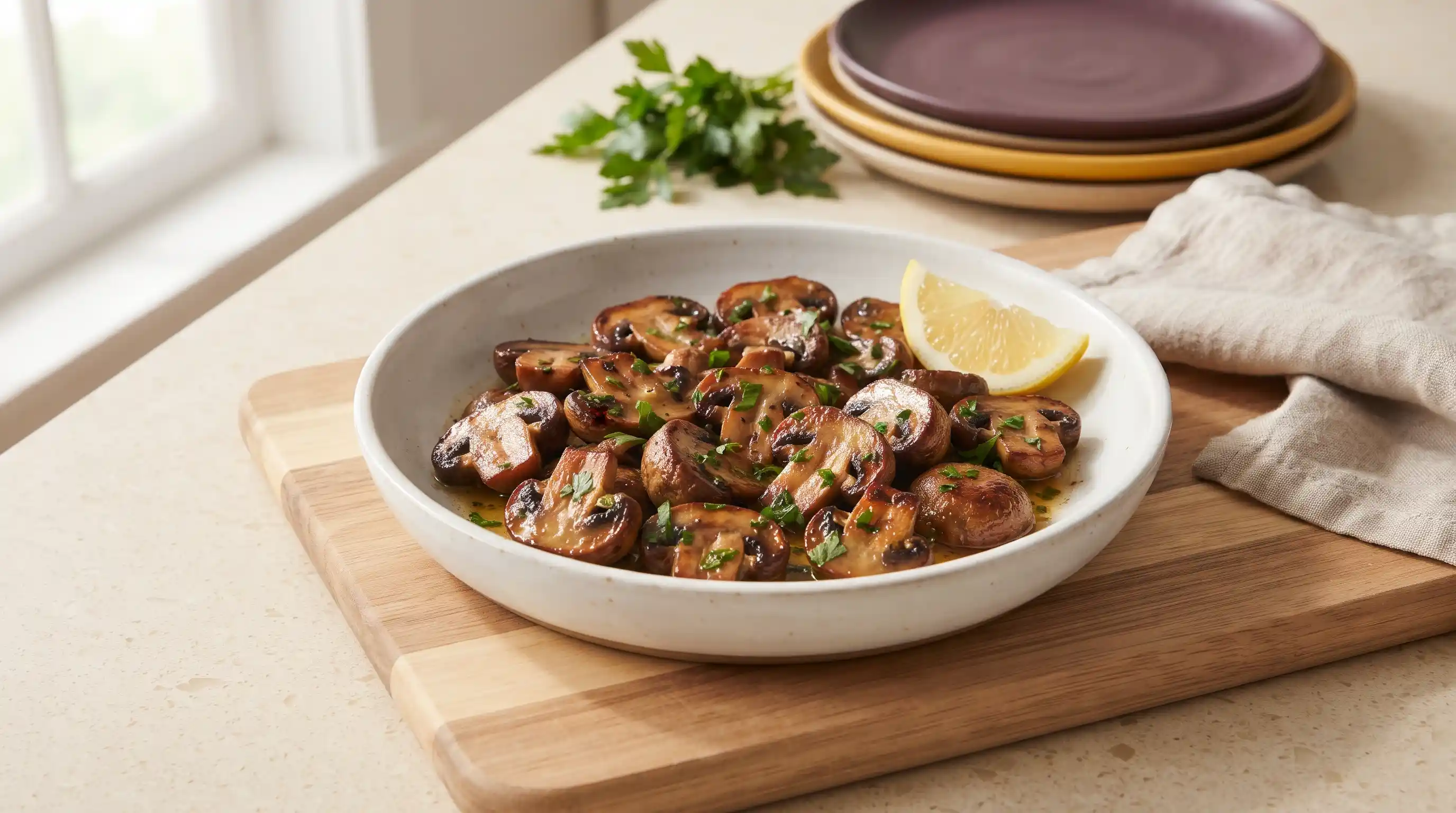
- Mushrooms. Salt and garlic go on late so they brown instead of stewing. The garlic butter mushrooms recipe includes times for button, chestnut, portobello and oyster.
- Onions. Roasted wedges, jammy slices and crispy fried onions all need different heat. All three are in our roasted onion wedges recipe.
- Asparagus. Cooking time depends on spear thickness. The lemon garlic asparagus page has a chart from pencil-thin to jumbo.
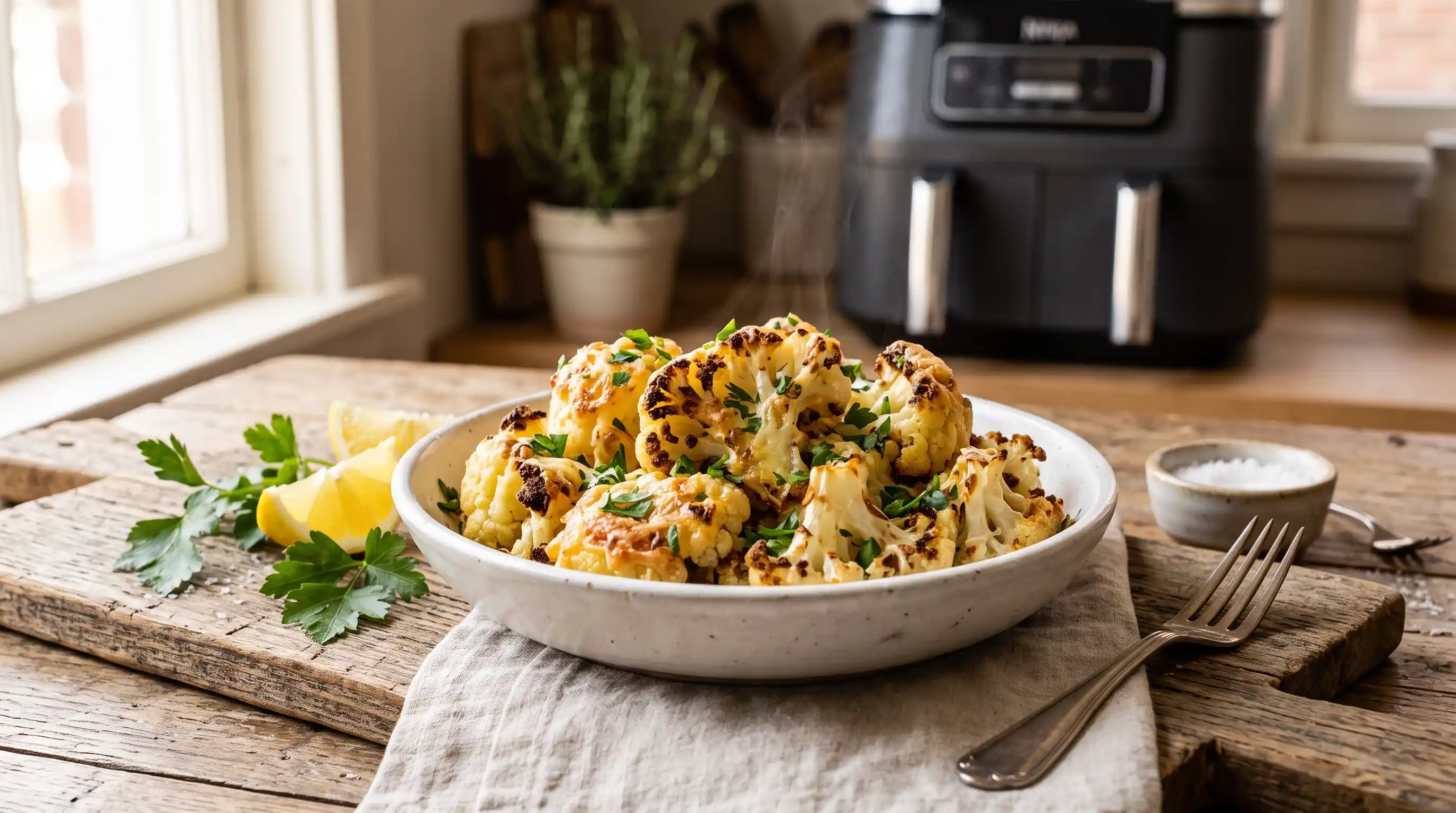
- Cauliflower. Large florets with garlic and parmesan; see the garlic parmesan cauliflower.
- Potatoes. For cubed roast potatoes with crisp edges, see air fryer potatoes. For small potatoes cooked whole or halved, see the baby potatoes recipe. For a whole jacket potato, see the air fryer baked potato.
- Sweet potatoes. Whole baked sweet potatoes and sweet potato fries are in our sweet potato recipe. For bite-size pieces, sweet or savoury, see sweet potato cubes.
- Tofu. Not a vegetable, but it often shares the basket with them. Pressing and a cornflour coating make the difference; see our crispy marinated tofu.
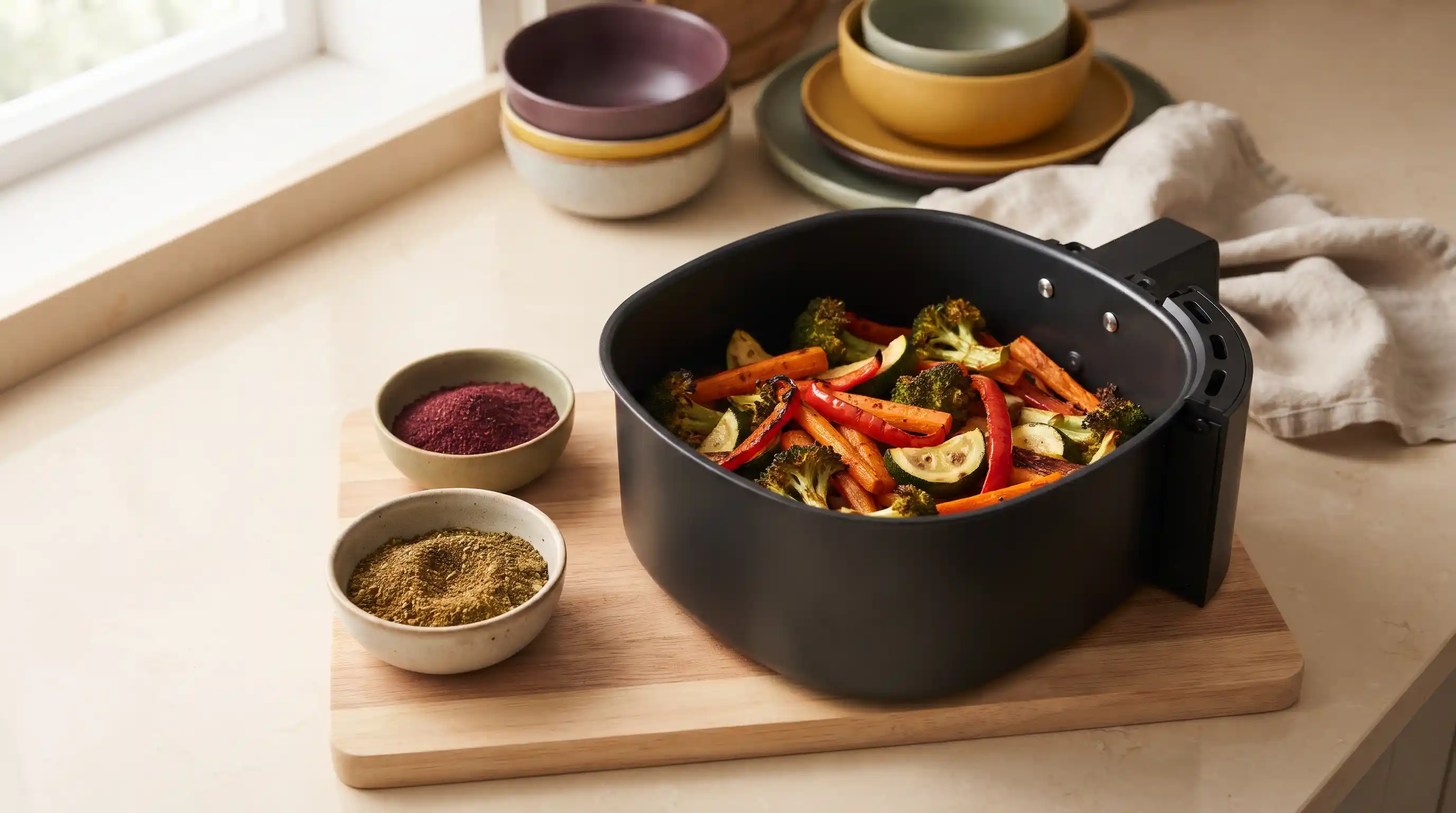
How to roast mixed vegetables in the air fryer
Mixed vegetables cook unevenly if they all go in together, because a carrot baton needs nearly twice as long as a pepper strip. Start the slowest group, then add the others so everything finishes at once.
| Group | Vegetables | When to add (for a 16-minute total at 200°C / 400°F) |
|---|---|---|
| Slow | Carrots, butternut squash, onion wedges, Brussels sprouts, aubergine | At the start |
| Medium | Cauliflower, okra, courgette, mushrooms | After 4 minutes |
| Fast | Broccoli, green beans, peppers, asparagus | After 8 minutes |
| Very fast | Cherry tomatoes, spring onions | For the last 5 minutes |
Cubed potatoes need 18 to 22 minutes, so if they are in the mix, give them 4 to 6 minutes on their own before the slow group goes in.
Toss each group with its own oil and salt before it goes in, rather than adding oil on top of food that is already cooking. Keep the total load to about 600g (1 lb 5 oz) in a 5 to 6 litre basket. Beyond that, cook in two batches and combine them at the end; a second batch takes a minute or two less because the air fryer is already hot.
A combination that works well: carrot batons and red onion wedges first, then courgette and red pepper, finished with 1 teaspoon of za'atar, a drizzle of pomegranate molasses and crumbled feta. Serve it warm with flatbread, or cold the next day as a salad.
How to cook frozen vegetables in the air fryer
Cook frozen vegetables straight from the freezer. Thawing them first lets them sit in their own water and they go soggy. Spread them in a single layer, toss with a little oil, and cook at 200°C (400°F), shaking every 4 to 5 minutes. Ice melts in the first few minutes, so if water collects in the drawer, pour it off at the first shake.
| Frozen vegetable | Time at 200°C (400°F) |
|---|---|
| Broccoli florets | 10–14 min |
| Cauliflower florets | 16–20 min |
| Green beans | 10–12 min |
| Okra (whole) | 12–15 min |
| Brussels sprouts | 14–18 min |
| Mixed diced vegetables | 10–12 min, on a perforated liner so they do not fall through |
| Sweetcorn kernels | 8–10 min, on a perforated liner |
Frozen vegetables were blanched before freezing, so they will be softer than fresh and brown less. They are still a good fast side. For frozen ready-made foods such as samosas, spring rolls or fries, use our frozen food air fryer chart.
Why are my air fryer vegetables not crispy?
Nearly every soft batch comes down to steam. Work through this table.
| Problem | Likely cause | Fix |
|---|---|---|
| Soft and pale all over | Basket overloaded | Cook 450g or less in one layer; batch the rest |
| Watery, limp courgette or mushrooms | Salted before cooking | Salt after cooking |
| Edges burnt, centres hard | Pieces too large or temperature too high | Cut smaller, or drop to 190°C (375°F) and cook longer |
| Some pieces burnt, others raw | Uneven cut sizes | Cut to the same size; remove small pieces early |
| Seasoning tastes bitter | Garlic powder or paprika cooked too long | Add delicate spices in the last 3 to 5 minutes |
| Dry and leathery | No oil, or cooked too long | Use 1 tbsp oil per 450g; check at the low end of the time |
| Smoke from the drawer | Excess oil or old grease | Use less oil; clean the drawer after each use |
If smoke is a regular problem, grease built up under the basket is the usual culprit. Our guide on how to clean an air fryer explains how to get it off.
Seasonings and sauces for air fryer vegetables
Dry spices go on with the oil for dense vegetables. Fresh herbs, citrus, sugar and cheese go on at the end, because they burn at 200°C.
Spice blends (per 450g of vegetables):
- Za'atar and sumac: 1 tsp za'atar and ½ tsp sumac after cooking. Good on courgette, carrots and cauliflower.
- Baharat: 1 tsp with the oil. Good on aubergine, squash and onions.
- Chaat masala: ½ to 1 tsp after cooking. Good on okra, corn and potatoes.
- Smoked paprika and garlic: ½ tsp each, garlic powder added for the last 5 minutes. Good on peppers, broccoli and chickpeas.
- Cumin and coriander: ½ tsp each with the oil. Good on carrots and aubergine.
Sauces to serve alongside:
- Tahini lemon: 3 tbsp tahini, juice of ½ lemon, a small grated garlic clove, salt and enough cold water to make it pourable.
- Garlic yoghurt: 150g thick yoghurt or labneh, 1 grated garlic clove, salt and dried mint.
- Chilli lime: 2 tbsp olive oil, zest and juice of 1 lime, ½ tsp chilli flakes and a pinch of salt.
- Pomegranate dressing: 1 tbsp pomegranate molasses whisked with 2 tbsp olive oil and a squeeze of lemon.
These all keep for 3 to 4 days in the fridge, so make a jar on the weekend and a tray of vegetables becomes a meal in 15 minutes during the week.
Frequently Asked Questions
How long do you cook vegetables in an air fryer?
Most vegetables take 6 to 22 minutes at 200°C (400°F). Quick-cooking vegetables such as asparagus, peppers and green beans need 6 to 10 minutes, broccoli and courgette 8 to 12, and dense vegetables such as carrots, Brussels sprouts and potato cubes 14 to 22 minutes.
What temperature do you air fry vegetables at?
Use 200°C (400°F) for most vegetables. Drop to 190°C (375°F) for dense or layered vegetables such as Brussels sprouts, onion wedges and cabbage, so the centres cook before the outer leaves burn.
Can you cook vegetables in an air fryer without oil?
Yes, but they brown less and can turn dry and leathery. Watery vegetables such as courgette, peppers and tomatoes manage best without oil. Dense ones such as carrots and potatoes need at least a teaspoon or a light spray to brown well.
Do you need to preheat the air fryer for vegetables?
It is worth it. Many vegetables cook in under 10 minutes, so a cold start makes timing unpredictable and can leave them soft. Three minutes at 200°C (400°F) is enough for most basket air fryers.
Can you cook frozen vegetables in the air fryer?
Yes, straight from frozen. Toss with a little oil and cook at 200°C (400°F) for 8 to 20 minutes depending on the vegetable, shaking every few minutes and pouring off any meltwater. They will be softer than fresh because they were blanched before freezing.
Are air fryer vegetables healthy?
They can be. The vegetables themselves are the same as roasted ones; what changes is the fat. A batch uses about a tablespoon of oil per 450g, far less than deep or shallow frying and about the same as a lightly oiled oven tray. Heavy cheese, butter or sugary glazes change the picture more than the cooking method does.
Can you steam vegetables in an air fryer?
Not properly. An air fryer dries and browns food rather than steaming it. For a softer result, cook vegetables in a covered foil tin with a tablespoon of water at 180°C (350°F), but a pan or microwave steams more effectively.