Air Fryer Hard Boiled Eggs (Plus Soft and Jammy Times)
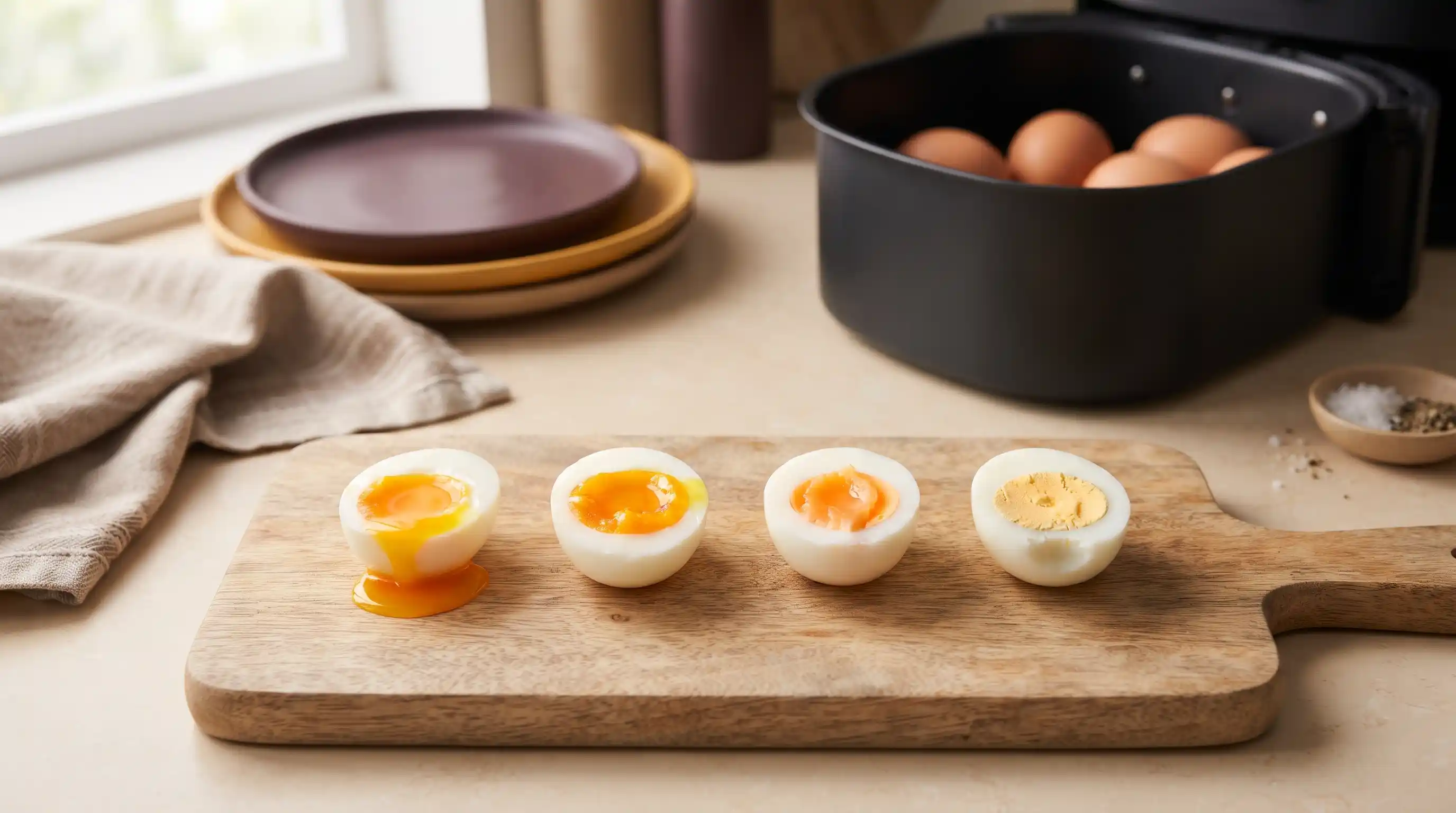
Whole eggs cooked in their shells in the air fryer at a low 135°C (275°F), then chilled in iced water. No pot, no boiling water, and a doneness chart that takes you from a runny dipping yolk to a firm hard-boiled egg.
Air fryer "boiled" eggs never touch water. They bake in their shells in dry, moving air, which is why the temperature has to be low. At 135°C (275°F) the white sets gently and the yolk cooks to whatever stage you choose. Turn the dial up to the usual 180 to 200°C and you get rubbery whites, brown scorch marks on the shell and the occasional crack.
There's no pot to fill and no steam in the kitchen, which counts for something in a Gulf summer. Don't skip the ice bath at the end. It stops the yolk cooking from residual heat and shrinks the egg away from the shell, which does most of the work when you peel.
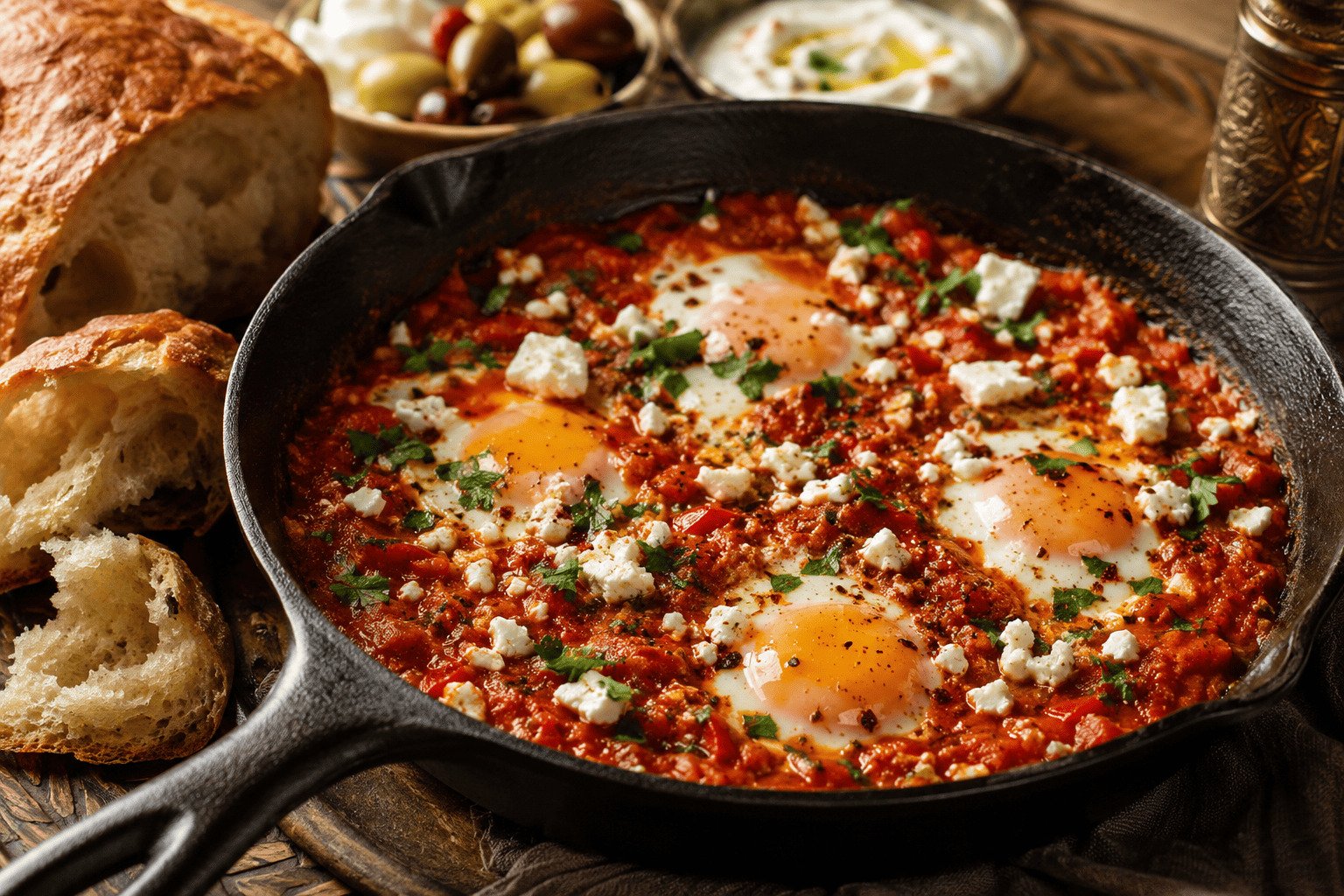
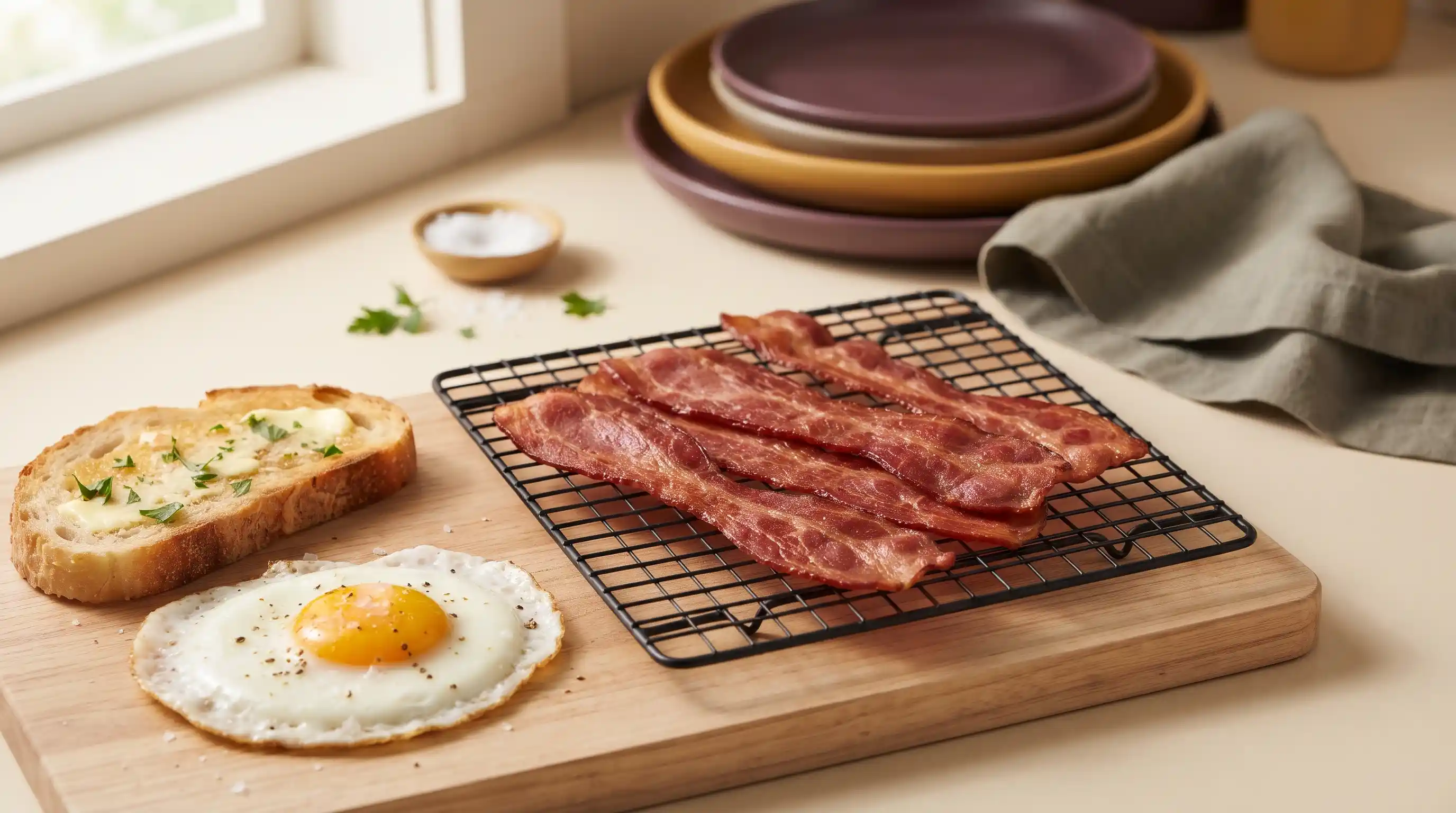
Air fryers vary more with eggs than with almost anything else, so the first time, cook two eggs, cut one open, and adjust by a minute. After that it is repeatable. Use them in Gulf-style shakshuka bowls, on a weekend breakfast plate with crisp halal turkey bacon, or chopped into salads and lunch boxes.
| Doneness | Time | Yolk and white | Best for |
|---|---|---|---|
| Soft boiled (runny) | 9–10 min | White just set, yolk fully liquid | Dipping toast, eating from the shell |
| Jammy | 11–12 min | Yolk thick and glossy in the centre | Ramen, rice bowls, salads |
| Medium | 13–14 min | Yolk set at the edge, fudgy middle | Breakfast plates, grain bowls |
| Hard boiled | 15–17 min | Yolk fully set and pale yellow | Egg salad, devilled eggs, lunch boxes |
| Medium eggs (about 50g) | Subtract 1 min | Smaller eggs heat through faster | Any of the above |
| Extra-large eggs (70g+) | Add 1–2 min | More mass to heat | Any of the above |
| At 150°C (300°F) | Subtract about 2 min | Firmer white, more risk of brown spots | Machines that will not go lower |
How long do boiled eggs take in the air fryer?
Hard boiled eggs take 15 to 17 minutes at 135°C (275°F), jammy eggs 11 to 12 and soft boiled 9 to 10, for large eggs straight from the fridge in an air fryer that has not been preheated. The chart above covers medium and extra-large eggs too.
The times are close together because the window between a runny and a firm yolk is narrow. Egg white begins to set at around 62°C and turns fully firm near 80°C, while the yolk thickens from about 65°C and sets solid at around 70°C. A couple of minutes is the difference between a yolk that still flows and one that holds its shape when sliced.
The number of eggs makes little difference, because each egg is heated by the air around it; a full basket of 12 may need an extra minute. Wattage and fan speed differ between models, so do the two-egg test once to find your machine's number.
If you preheat, take 1 to 2 minutes off every time in the chart.
What temperature should you use for air fryer boiled eggs?
Use 135°C (275°F). An air fryer cooks with fast-moving dry air from an element just above the food (see how an air fryer works), so the shell sits in air well above the 100°C of boiling water. 135°C is low enough that the outside of the white stays tender while the heat works into the yolk, and high enough to finish a hard-boiled egg in about a quarter of an hour.
Going lower is fine. At 120°C (250°F) the eggs take 1 to 2 minutes longer at each stage and the whites are slightly softer. Going higher causes problems. At 150°C (300°F), a common setting because it is the lowest air-fry temperature on some models, hard-boiled eggs are ready in about 13 to 15 minutes, but the whites are firmer and brown spots are more likely where the shell touches the basket. At 180°C (350°F) or above, the shell can crack as the air inside expands, and the white near the shell turns rubbery before the yolk sets.
If your air fryer's air-fry mode will not go below 150°C, check the Bake or Roast modes, which on some machines allow lower temperatures.
How do you make air fryer eggs easy to peel?
Chill them properly and use eggs that are a week or two old. Both matter more than how the eggs were cooked.
An ice bath does two jobs. It stops carryover cooking, and as the egg cools, the white contracts slightly and pulls away from the membrane under the shell. Ten minutes in iced water, until the egg feels cold in your hand, is the target for hard-boiled eggs. Peeling them warm is the most common reason shells come away in tiny pieces with chunks of white attached.
Very fresh eggs are harder to peel whatever you do. A fresh egg white has a lower pH and bonds tightly to the membrane. Over a week or so in the fridge, carbon dioxide escapes through the porous shell, the pH of the white rises and the bond weakens. If you buy eggs from a farm or a weekly market, keep a few back for boiling.
Start peeling at the wide end, where the air pocket gives you a gap to get under the membrane, and peel under running water so it can slide between shell and white. If the membrane is stubborn, slip a teaspoon under it and run it round the egg.
Why do air fryer eggs get brown spots or crack?
Brown spots form where the shell sits against hot metal. The basket's mesh or grill pattern conducts heat more intensely than the air, and the white directly underneath can scorch slightly. It is cosmetic, but you can prevent it by standing eggs in silicone muffin cups, on a wire rack, or on a small ring of scrunched foil. Baked-on grease in the basket makes it worse, so a clean basket helps; our guide to cleaning an air fryer basket covers removing that residue.
Cracks happen when the temperature is too high or the eggs already have hairline fractures. Inspect each egg before cooking and stay at 135°C. A dark grey-green ring around a hard-boiled yolk is a sign of overcooking: iron in the yolk reacts with sulphur from the white when eggs are cooked too long or cooled too slowly. Cut a minute and get them into the ice bath faster.
Air Fryer Boiled Eggs
Ingredients
- 6 large eggs (about 60g each, straight from the fridge, with no cracks)
- 2 cups ice cubes (for the ice bath)
- cold water (enough to cover the eggs)
- flaky salt and black pepper (to serve)
Instructions
- 1
Take the eggs straight from the fridge and check each one for hairline cracks. A cracked egg leaks white as it heats, which burns onto the basket.
The times on this page assume fridge-cold eggs. Room-temperature eggs cook about 1 minute faster.
- 2
Place the eggs in the air fryer basket in a single layer with a little space between them. Do not preheat. If your basket tends to leave brown marks, stand each egg in a silicone muffin cup or on the wire rack.
- 3
Set the air fryer to 135°C (275°F) and cook for the time in the chart: 9 to 10 minutes for soft boiled, 11 to 12 for jammy, 13 to 14 for medium and 15 to 17 for hard boiled.
- 4
While the eggs cook, fill a bowl with the ice and enough cold water to cover them completely.
- 5
As soon as the timer goes, lift the eggs into the iced water with tongs. Leave hard and medium eggs for 10 minutes, until cool right through. For soft or jammy eggs you want to eat warm, chill for 2 to 3 minutes just to stop the cooking.
Do not let the eggs sit in the hot basket. They keep cooking from the shell inwards, and a jammy yolk turns firm in about 2 minutes.
- 6
To peel, tap the wide end on the counter (there is an air pocket under the shell there), then roll the egg gently to crack the shell all over. Peel under a trickle of cold water, starting at the wide end and getting your thumb under the thin membrane.
- 7
Cut one egg open to check the yolk. If it is not how you like it, adjust the next batch by 1 minute and note the time for your machine.
Equipment
Air fryer · Tongs · Large bowl · Silicone muffin cups or wire rack (optional)
Tips
- Once you've found the right time for your machine, write it on a strip of tape inside a cupboard door. It won't change unless the air fryer does.
- Cook a week's worth of hard-boiled eggs on Sunday. They keep for 7 days in the fridge, in or out of the shell.
Troubleshooting
- Yolk underdone even after the chart time: your machine runs cool or the eggs were extra large. Add 1 to 2 minutes and test one egg.
- Green-grey ring around the yolk: overcooked or cooled slowly. Cut a minute and move eggs into the ice bath immediately.
- Shell comes off in tiny pieces: the eggs were too fresh or not chilled long enough. Chill for a full 10 minutes and use older eggs.
Substitutions
- Duck eggs are larger and have thicker shells. Start at 18 minutes for hard boiled and test one.
- No ice? Run the eggs under the cold tap for 2 minutes, then leave them in a bowl of the coldest water you have, changing it once.
Variations
- Jammy soy eggs: peel 11-minute eggs and marinate them for 4 to 12 hours in 120ml halal soy sauce, 120ml water and 1 tbsp honey with a sliced garlic clove. Check the soy sauce label for added alcohol.
- Devilled eggs: mash hard-boiled yolks with mayonnaise, a little mustard (check the label, as some Dijon-style mustards contain alcohol) and a pinch of smoked paprika, then pipe back into the whites.
- Za'atar eggs: halve jammy eggs, drizzle with olive oil and sprinkle with za'atar and flaky salt for a quick mezze plate.
What to Serve With It
- Serve soft-boiled eggs with toasted bread soldiers and a pinch of cumin salt.
- Halve jammy eggs over a rice bowl with cucumber, avocado and chilli oil.
- Add hard-boiled eggs to a suhoor plate with labneh, olives, tomatoes and warm khubz for a filling pre-dawn meal in Ramadan.
Storage
Refrigerate hard-boiled eggs within 2 hours of cooking. They keep for up to 7 days, the time recommended by the USDA for hard-cooked eggs. Store unpeeled eggs in a covered container, and peeled eggs in a sealed container with a damp paper towel so the whites do not dry out. Soft-boiled and jammy eggs are best eaten the same day.
Reheating
Eat hard-boiled eggs cold or bring them to room temperature. To warm them, pour just-boiled water over the eggs in a bowl and leave for 5 minutes. Do not reheat whole boiled eggs in the microwave or air fryer, as steam trapped in the yolk can make them burst.
Make Ahead
Cook a batch of hard-boiled eggs up to 7 days ahead and keep them refrigerated. Leaving them unpeeled until the day you eat them keeps the whites moist.
Frequently Asked Questions
Can you make boiled eggs in an air fryer?
Yes. Whole eggs cook in their shells in the air fryer without any water. Set it to 135°C (275°F) and cook large, fridge-cold eggs for 15 to 17 minutes for hard boiled or 9 to 12 minutes for soft and jammy, then chill them in iced water.
How long do you cook hard boiled eggs in the air fryer at 300°F?
At 150°C (300°F), large hard-boiled eggs take about 13 to 15 minutes. That is roughly 2 minutes less than at 135°C (275°F). The whites will be slightly firmer, and brown spots on the shell are more likely, so use a silicone cup or rack under each egg.
Are air fryer hard boiled eggs easy to peel?
They peel about as easily as eggs boiled in water, and the ice bath is what makes the difference. Chill them in iced water for 10 minutes, use eggs that are at least a week old, and start peeling from the wide end under running water.
Can air fryer eggs explode?
Whole eggs cooked at 135°C (275°F) rarely crack or burst. Problems come from high temperatures, eggs with hairline cracks, or reheating boiled eggs, where steam builds up inside the yolk. Never reheat a whole boiled egg in the air fryer or microwave.
How long do air fryer boiled eggs last?
Hard-boiled eggs keep for up to 7 days in the fridge, peeled or unpeeled, if refrigerated within 2 hours of cooking. Soft-boiled and jammy eggs are best eaten the same day.
Are soft-boiled air fryer eggs safe to eat?
For most healthy adults, yes. The USDA advises cooking eggs until the yolk and white are firm, especially for young children, pregnant women, older adults and anyone with a weakened immune system. Those groups should choose hard-boiled eggs or use pasteurised eggs for runny yolks.